
Saturday 20 June 2026
There are international days that feel like a celebration, and there are others that ask us to pause. World Refugee Day, marked every year on 20 June, is both. It honours people who have been forced to leave home through war, persecution, violence or disaster, but it also recognises courage, creativity and the possibility of beginning again. At its best, the day is not only about sympathy. It is about seeing refugees as neighbours, colleagues, artists, students, business owners and storytellers whose lives contain far more than the moment of flight.
The modern day was first observed globally on 20 June 2001, marking 50 years since the 1951 Refugee Convention, the legal cornerstone of international refugee protection. Its roots, however, go back further. Before it became a United Nations observance, 20 June was known in many places as Africa Refugee Day, reflecting the long history of displacement across the continent and the leadership of African countries in building regional protection for people forced to flee. In December 2000, the UN General Assembly designated 20 June as World Refugee Day, creating a global moment of attention.
The date matters because refugee protection is not an abstract idea. The 1951 Convention defines who is a refugee and sets out key rights and responsibilities: the right to seek safety, the principle that people should not be returned to places where their life or freedom would be threatened, and the understanding that protection is an international responsibility. The day therefore looks backwards to a legal promise, but it also looks outwards to a world in which that promise is tested daily.
What Happens on World Refugee Day?
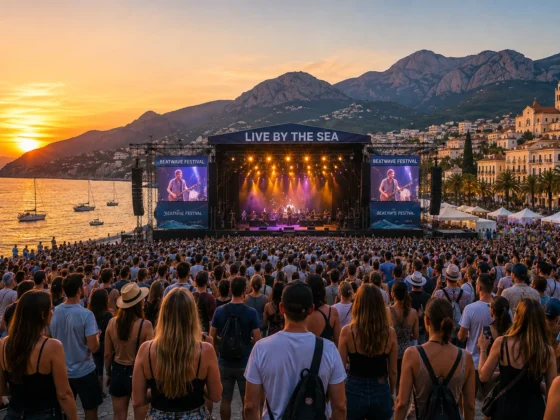
How World Refugee Day is marked varies widely. In some countries, it is a policy moment, with statements from governments, UN agencies and charities. In others, it takes the form of community meals, film screenings, concerts, exhibitions, sports days, school activities and storytelling events. Many of the most powerful celebrations are led by refugees themselves. Food is often central. A plate of Syrian kibbeh, Afghan bolani, Eritrean injera or Ukrainian borscht can do what statistics struggle to do: remind people that culture travels with people, and that welcome is often easiest around a table.
In the UK, World Refugee Day sits inside Refugee Week, which in 2026 runs from 15 to 21 June with the theme Courage. Refugee Week has become one of the world’s largest arts and culture festivals celebrating the contributions, creativity and resilience of refugees and people seeking sanctuary. It began in the UK in 1998, at a time when public discussion about asylum was often hostile, and it was designed to counter fear with encounter. The format is deliberately open. Anyone can host an event, from a major museum to a local library, school, faith group or theatre.
That openness is one of the reasons the day works. A memorial can be solemn; a campaign can feel distant. A week of art, food, music and conversation allows people to enter the subject through curiosity rather than guilt. It can also avoid reducing people to suffering. Refugee stories often include trauma, but they also include humour, ambition, family, enterprise and ordinary domestic detail. A good World Refugee Day event makes space for complexity.
What happens on World Refugee Day?
There are plenty of interesting facts that reveal how global this day has become. Events are often staged in host countries and refugee-hosting regions, including cities such as London, Berlin, Amman, Nairobi, Kampala, Istanbul, Toronto and Sydney. Some events take place in schools, where children learn why people move and what it means to seek safety. Others take place in football stadiums, art galleries or community kitchens. In recent years, the emphasis has increasingly shifted from charity to inclusion: refugees should not simply survive, but be able to work, learn, contribute and thrive.
For travellers, World Refugee Day is not a conventional festival, but it can still shape a meaningful journey. The best place to experience it depends on what kind of encounter you want. Geneva has obvious symbolic weight as the home of UNHCR and many humanitarian organisations, though events there can feel institutional. Berlin offers another perspective, as a city shaped by migration, memory and modern refugee communities. In Australia, Refugee Week has a long history and large public programmes, especially in cities such as Sydney and Melbourne.
For a UK-based traveller, however, London is one of the most accessible and rewarding places to mark the day. Its borough-by-borough events make the subject local and human. Waltham Forest, Hammersmith and Fulham, Richmond, Westminster and other areas regularly host talks, performances, food events, exhibitions and gatherings. The city is also a living map of displacement and renewal, from Huguenot weavers in Spitalfields to Jewish, Caribbean, Somali, Kurdish, Syrian, Afghan and Ukrainian communities. London does not tell one refugee story; it tells hundreds.
Anyone marking the day should approach it with care. It is not a theme party, and it is not an opportunity for voyeurism. The most respectful way to take part is to listen, support refugee-led organisations, attend public events, read work by refugee writers, buy from refugee-run businesses, or volunteer with local groups that offer practical help. Even small acts matter: learning how the asylum system works, challenging lazy stereotypes, or making space for a new neighbour.
How to Celebrate World Refugee Day
World Refugee Day can also look at the places people rebuild their lives. Cities of sanctuary, refugee-run restaurants, community gardens and small cultural festivals often reveal a quieter geography of welcome. These are not always headline attractions, but they can be among the most meaningful encounters a visitor has. A walking tour in East London, a film night in Glasgow, a shared supper in Manchester or a public conversation in Bristol can show how displacement becomes part of a city’s cultural fabric. The point is not to turn hardship into an itinerary, but to recognise that travel is also about meeting the world as it really is, with empathy as well as curiosity, and with enough humility to know when to listen rather than narrate.
World Refugee Day is ultimately about the right to safety. It asks a simple question that has echoed through history: what should happen when a person can no longer remain at home? The answer, at least in principle, is that the world should not turn away. The day began as a legal commemoration, but it has grown into something broader and more human. It is a reminder that home is not only a place on a map. It is language, memory, work, school, friendship, dignity and the chance to plan for tomorrow.
Photo by Maria Teneva on Unsplash