
Every February, many of the world’s professional teams decamp to Mallorca for their first big block of training. By spring, thousands of amateur cyclists have followed them. It’s easy to see why. In a single day you can ride quiet lanes through almond groves, climb a mountain road carved into a UNESCO-listed landscape, and finish with a coffee overlooking the Mediterranean.
If you’re thinking about a cycling trip to Mallorca, here’s what to expect, when to go and how to make the most of it.
When to go
The riding season runs from roughly February to early November. Spring (March to May) is the busiest time, with mild temperatures, long days and the island at its greenest. It’s also when the Mallorca 312, one of Europe’s biggest amateur sportives, takes place each April.
Late summer (mid-September to October) is the quieter alternative. The sea is still warm, the summer crowds have gone and the roads are calmer. July and August are possible, but the heat on the climbs is hard going, so set off early and aim to finish by lunchtime.
Three kinds of riding
The plains. The centre of the island, the Pla de Mallorca, is a web of quiet lanes between farming villages such as Sineu, Petra and Santa Margalida. Gentle gradients, little traffic and dry-stone walls make it ideal for warm-up days, recovery rides and long endurance miles.
The Serra de Tramuntana. This mountain range runs along the north-west coast and was made a UNESCO World Heritage Site in 2011 for its cultural landscape of terraces, stone villages and old mule tracks. It’s also home to almost all of Mallorca’s big climbs.
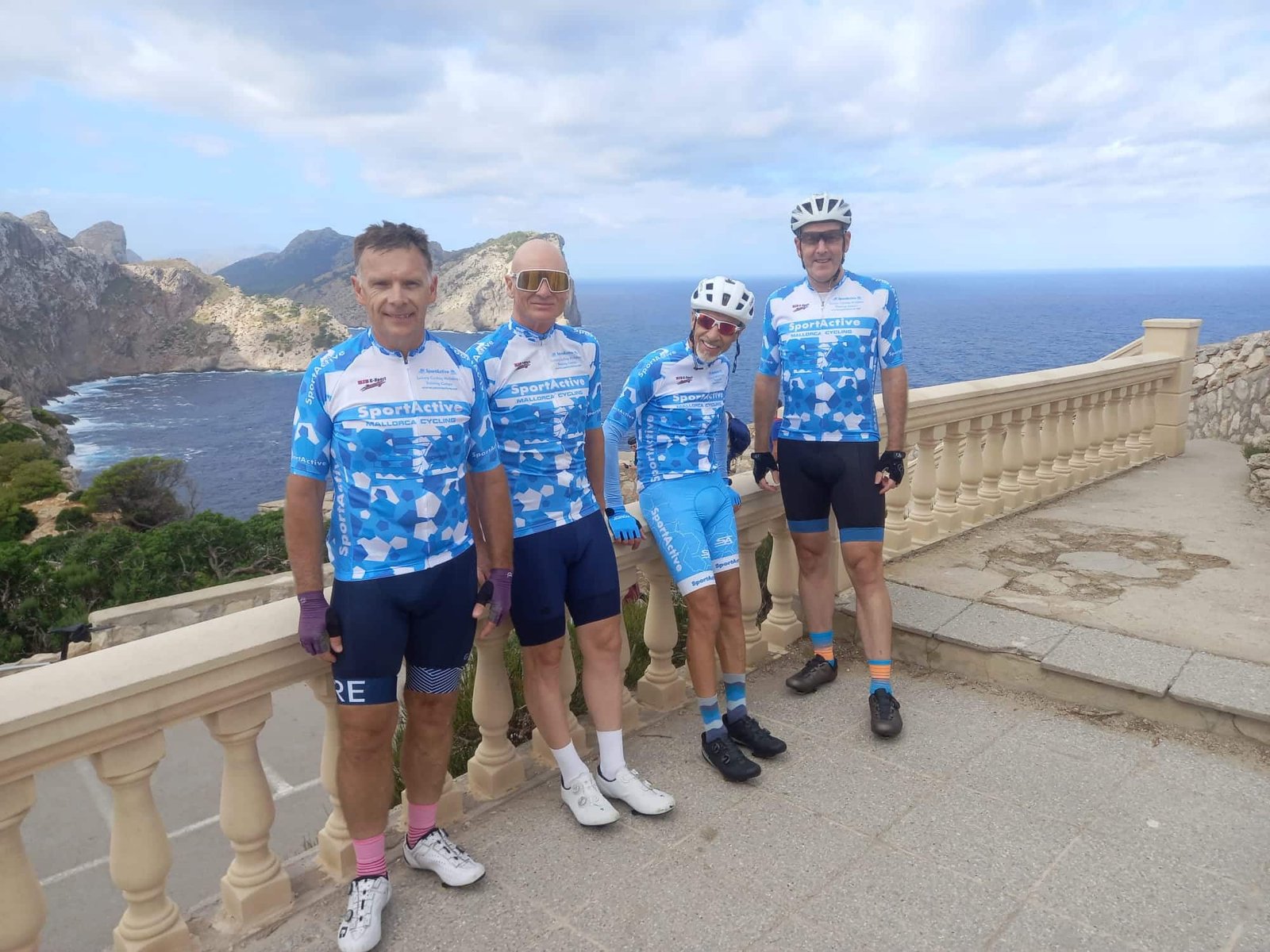
The coast. The ride out to the lighthouse at Cap de Formentor, on the island’s northern tip, is a favourite, featuring a twisting road along the cliffs, with the sea on both sides by the end.
The climbs everyone talks about
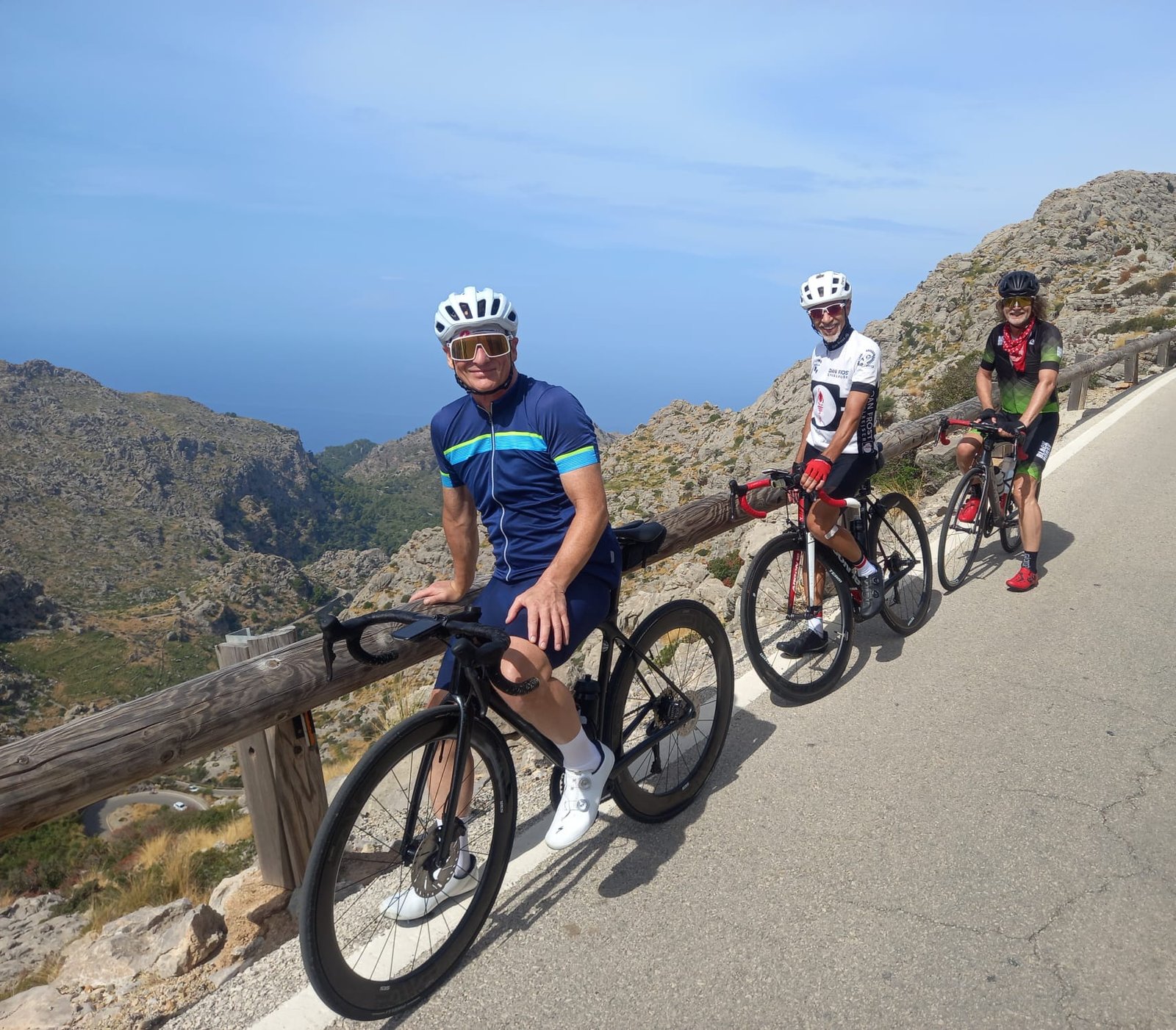
Sa Calobra is Mallorca’s most famous climb, and a feat of engineering. Designed by Antonio Parietti and opened in 1933, the road drops from the Coll dels Reis (682 m) to a tiny cove through a long series of hairpins, including a 270-degree loop that passes under itself, known as the “knot”. The catch is that it’s a dead end, so the only way out is back up. When you start the 9.9 km climb expect an average gradient of 7.1%, with short ramps above 10%. A selfie under the Colls dels Reis isn’t mandatory but is advised.
Puig Major, the island’s highest mountain at 1,447 m, gives its name to Mallorca’s longest climb. The long, steady road up from Sóller towards the tunnel beneath its summit, with views back over the port. Other favourites include the climb to the monastery at Lluc via the Coll de sa Batalla, and the switchbacks up to the sanctuary of Cura on Puig de Randa, a lone hill in the middle of the plain.
Guided or self-guided?
Mallorca is easy to ride on your own. Bike hire is widely available, routes are well documented and there’s a café in almost every village. If you know the island, or enjoy planning your own days, self-guided riding is flexible and cheaper.
A guided trip suits riders who’d rather spend their energy on the bike. A good guide knows which roads are quiet at which time of day, how to route around closures and market days, and where the best coffee stop is on each climb. Riding in groups split by ability also means you can ride at your own pace without holding anyone up, or being held up yourself.
Most of all, camaraderie forms naturally on guided Mallorca cycling holidays, as conversation leans naturally to the day’s ride, and what’s coming up next.
Many cyclists feel safer knowing that should a mechanical failure occur, or something unforeseen, there is a professional on hand to deal with the situation safely and quickly.
Perhaps the golden rule is that if you know what to do should you come off the bike or need to fix it, self-guided is fine. If you’re not sure, then guided ensures you are fully looked after no matter what happens.
Most Mallorca cycling holidays either offer guided or self-guided, with some offering a true luxury experience where you stay in 5-stars hotel, have a choice of premium hire bikes, and are completely looked after on and off the bike.
Where to stay
The north of the island makes a good base. Alcúdia and Port de Pollença put you at the foot of the Tramuntana, a short ride from Formentor and within reach of Sa Calobra, with flat roads nearby for easier days. Palma works well if you want a city break, but most mountain rides then start with a longer run-in.
Bike-friendly hotels range from simple guesthouses to full-service resorts. At the top end, luxury cycling holidays pair guided rides with a 5-star hotel, which brings secure bike storage, a spa and a proper recovery dinner. After six hours in the mountains, that matters more than you might think.
Practical tips
- Bring or hire? Flying with your own bike means your own fit; hiring saves the bike box and the airline fees. If you hire, take your pedals, your saddle if you’re particular about it, and your bike measurements.
- Gearing. A compact chainset and a wide-range cassette make the long climbs far more enjoyable.
- Know the rules. In Spain, cyclists must wear a helmet outside towns, and drivers must leave 1.5 m when overtaking. On narrow mountain roads, ride single file when traffic builds.
- Mind the wind. The Tramuntana, the north wind the mountains are named after, can make the north coast hard work. Plan exposed sections with the wind behind you where you can.
- Fuel and layers. Café stops are part of the culture. Eat before the big climbs, carry plenty of water, and pack a gilet for the descents, which are cooler than you’d expect even on warm days.
The bottom line
Mallorca packs a remarkable range of riding into a small island. Whether you come for a week of big mountain days or gentle rides between beaches and cafés, plan around the seasons, choose a base that suits your riding, and leave plenty in the legs for the climb back up from Sa Calobra.