Peru does not reward improvisation. The country’s appeal lies in contrast, but those contrasts create friction. Altitude shifts. Climate changes fast. Travel time competes with recovery time. A multi-region journey succeeds only when structure absorbs complexity rather than amplifying it.
Travellers who attempt to see “everything” often underestimate how geography dictates pace. Peru compresses extremes into a single itinerary. The outcome depends less on ambition and more on sequencing.
Understanding Regional Transitions, Not Destinations
Peru’s regions do not sit side by side in practical terms. The coast, the Andes, and the Amazon operate under different physical and logistical rules. Moving between them resets temperature, oxygen levels, transport modes, and daily energy demands. These shifts follow distinct Peru climate patterns that influence not only comfort, but pace, recovery time, and how much each transition costs in physical effort rather than distance.
Lima functions as an entry and exit point, not an experienced anchor. Its role is administrative as much as cultural. Cusco and the Sacred Valley impose altitude constraints that shape activity windows. The Amazon reverses the equation again, prioritising humidity tolerance, daylight rhythm, and slower movement.
The critical decision is not where to go first, but how much physiological adjustment each transition requires. Travellers who treat regions as interchangeable often lose days to fatigue rather than exploration.
Seasonality Shapes What Is Possible
Timing does not affect all regions equally. Dry season advantages the highlands but compresses visitor numbers into narrow months. Wet season complicates trekking but opens river access in the Amazon. There is no universal “best time”, only trade-offs aligned to intent.
Highland routes depend on stable weather and visibility. Amazon access depends on water levels and navigability. Attempting to optimise both simultaneously creates tension. Most itineraries resolve this by prioritising one region’s conditions and accepting limits elsewhere.
This is where structured Peru tour packages often outperform independent planning. Not through convenience, but through sequencing that accounts for seasonal constraints without forcing compromises into the daily schedule.
Altitude as a Planning Variable
Altitude is not a footnote. Cusco sits high enough to affect sleep, appetite, and exertion. Machu Picchu sits lower, but the approach routes do not. Rushing from sea level into high-output activity is the most common planning failure.
Effective itineraries place acclimatisation ahead of ambition. Light activity precedes demanding routes. Buffer days absorb individual variation rather than forcing uniform performance. This is not caution. It is operational realism.
Travellers who ignore altitude do not see more. They see less, while expending more energy.
The Amazon Requires Commitment, Not Add-Ons
Rainforest travel resists compression. Short stays reduce depth without reducing effort. Entry alone consumes time. Wildlife patterns do not conform to fixed schedules. The environment rewards patience.
Puerto Maldonado suits travellers already in the southern Andes. Iquitos suits those willing to accept isolation as part of the experience. Each choice determines transfer time, lodge type, and activity range.
Attempting to add the Amazon as a brief diversion often creates imbalance. Entry alone consumes time, while wildlife and river systems follow rhythms outside fixed schedules. What matters is the time required for meaningful Amazon travel, not how efficiently it can be compressed. Without protected days and tolerance for unpredictability, rainforest travel delivers effort without depth.
Archaeological Density Creates Bottlenecks
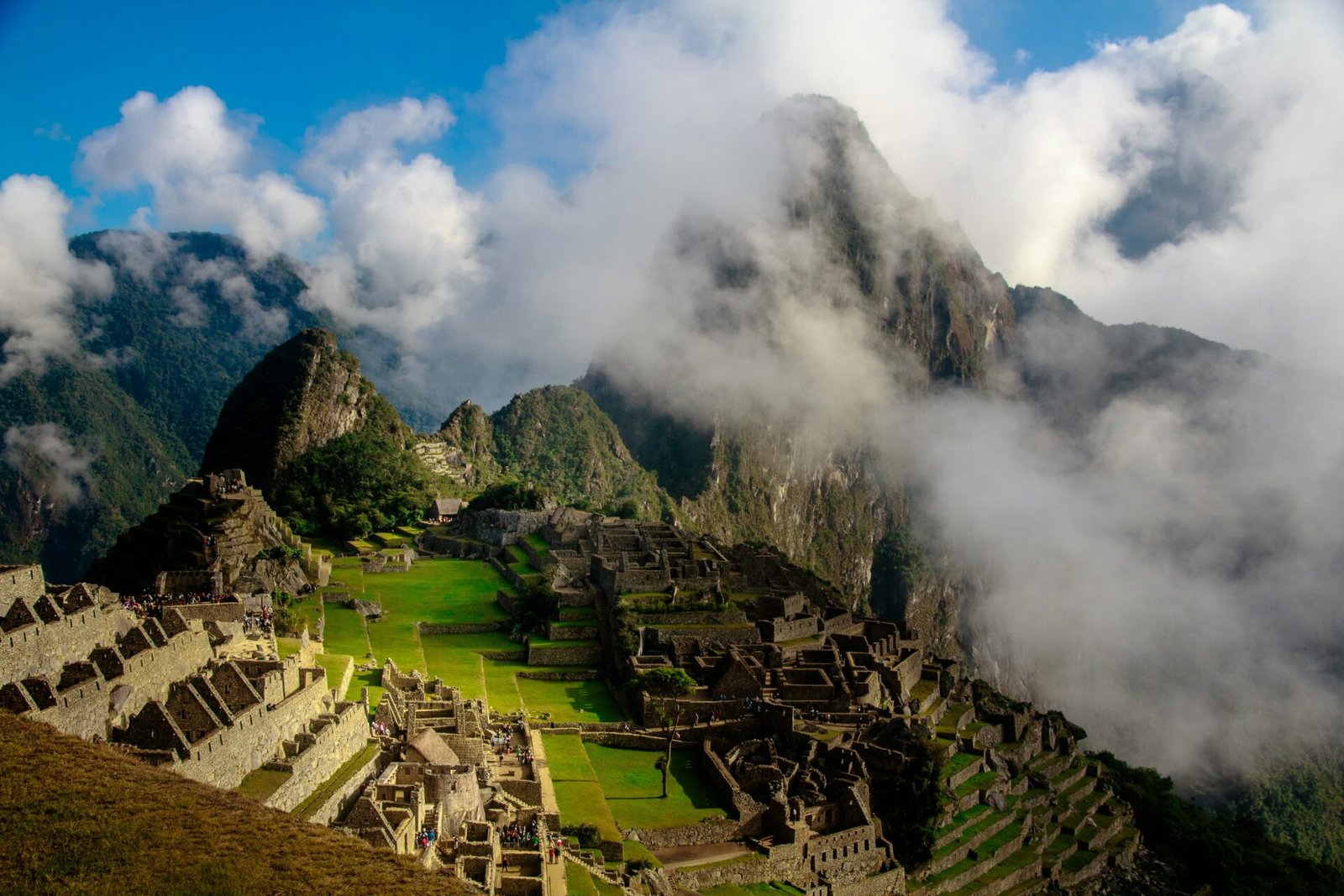
Peru’s ruins are not dispersed evenly. Visitor management systems concentrate movement into narrow corridors, where visitor capacity limits at Machu Picchu shape daily access as much as physical readiness. Timed entry, circuit restrictions, and quota controls mean planning depends on calendar discipline as much as endurance, turning archaeological density into a logistical constraint rather than a sightseeing detail.
Other sites offer relief from congestion but impose different demands. Choquequirao requires endurance. Chan Chan requires climate tolerance rather than altitude adjustment. Sacred Valley sites require transport coordination more than permits.
Successful planning aligns archaeological interest with physical capacity and permit realities, not popularity rankings.
Logistics Dictate Flow
Internal flights save time but fragment days. Trains operate on fixed slots. Road travel absorbs hours unpredictably. Each transport decision affects recovery and continuity.
Well-designed itineraries reduce transfer fatigue by clustering activities geographically and avoiding unnecessary backtracking. This often means choosing fewer regions, not more, and accepting omission as a form of control.
Travel in Peru rewards coherence. Fragmentation carries a hidden cost.
Equipment and Preparation Follow Geography
Packing for Peru is not about volume. It is about adaptability. Highland cold, coastal humidity, and rainforest heat coexist within the same week. Clothing must manage exposure rather than appearance.
Footwear affects endurance more than distance. Rain protection matters even in the dry season. Insect control is functional, not optional. Preparation failures compound quickly once outside major centres.
Health planning follows the same logic. Vaccinations, insurance coverage, and altitude management sit outside itinerary design but determine whether it functions under pressure. In multi-region travel, gaps in preparation surface quickly, which is why aligning plans with health requirements for travel to Peru often matters more than optimising routes or timelines.
Trade-Offs Are Inescapable
Multi-region travel forces choice. Time spent transitioning reduces time immersed. Comfort reduces reach. Reach reduces recovery. There is no neutral position.
Strong itineraries acknowledge these limits openly. They align expectations with constraints rather than masking them through ambition. The goal is not coverage. It is continuity.
Peru offers a rare geographic range within a single journey, but that range demands discipline. The most successful multi-region adventures treat planning as a stabilising force rather than a checklist exercise. When sequencing respects altitude, seasonality, and logistics, the country opens gradually rather than all at once.
Peru rewards travellers who plan for transition rather than accumulation. Geography, altitude, and climate shape experience more than ambition ever will. When sequencing absorbs friction instead of fighting it, movement becomes sustainable and discovery deepens. The value of a multi-region journey lies not in how much ground it covers, but in how steadily it allows travellers to adapt. With discipline and realistic pacing, Peru reveals coherence instead of exhaustion.
Image: Unsplash, Scott Umstattd