
Spring arrives in a burst of color at Skagit Valley, Washington State. With millions of tulip blooms stretching across farmland, mountain backdrops, and charming small towns, it’s no wonder your first visit can feel both exciting and overwhelming. The valley’s postcard‑perfect scenery attracts travelers from all over the world, and it’s a dream trip but only if you plan it right.
The gardens are the centerpiece of the Skagit Valley Tulip Festival, anchoring a celebration of seasonal beauty. To make the most of it, a few thoughtful choices will help you enjoy the gardens with ease and wonder.
Time Your Visit Right
Timing is everything when it comes to tulips. The festival runs throughout April, but bloom levels shift each year based on the weather. Tulips usually begin blooming early in the month and peak around mid-April, though this can vary.
You should always check the official bloom updates before your trip. This helps you avoid arriving too early or missing peak color. If you want the best mix of flowers, aim for mid-April. If flexibility isn’t an option, expect different fields to bloom at different times throughout the spring season.
Avoid Crowds With Smart Scheduling
Crowds can quickly change your experience. Weekends bring heavy traffic and packed gardens, especially during peak bloom. Weekdays, particularly Tuesday through Thursday, offer a calmer and more enjoyable visit.
Arriving early in the morning also helps. Roads in the valley are small and can back up fast as the day progresses. If mornings aren’t possible, try late afternoon. You’ll still catch beautiful light and avoid the busiest hours.
Book Tickets and Lodging in Advance
Each garden manages its own ticketing, so buying early guarantees entry during peak bloom and helps you plan which stops to include. The most reliable option is to start at the official Skagit Valley Tulip Festival website, which provides links to participating gardens such as Roozengaarde, Tulip Town, Garden Rosalyn, and Tulip Valley Farms.
Lodging also fills up quickly across nearby towns like Mount Vernon, Burlington, and La Conner, especially on peak weekends. Once you’ve set your travel dates, reserve accommodations early to avoid last‑minute stress.
Understand That It’s a Valley-Wide Experience
The festival is not a single location. It spreads across multiple farms and towns throughout Skagit County. Beyond the gardens, you’ll find artisan markets, art exhibits, and local museums, along with community events like the tulip parade and street fair.
That means you’ll be driving between stops. It helps to plan your route ahead of time and group nearby gardens together. Allow enough time at each stop so you don’t feel rushed, and think of the outing as a scenic road trip rather than a one‑stop attraction.
Plan Transportation and Parking Carefully
Driving is the easiest way to explore the tulip fields. Public transportation options are limited, and reaching farms often requires a car.
Parking is usually available at major gardens, but it can fill up quickly on busy days. Stopping along roads for photos may be tempting, but it’s unsafe and can result in fines. With a little patience and planning, you’ll spend less time in traffic and more time enjoying the views.
Dress for the Weather and Field Conditions
Spring weather in Washington State is unpredictable. You might see sunshine, rain, and wind all in one day. That’s why layering is essential.
Wear comfortable shoes, ideally waterproof boots. The fields are working farms, so paths can get muddy, especially after rain. Bring a light jacket and be ready to adjust throughout the day. Staying comfortable lets you focus on the experience instead of the conditions.
Make the Most of Your Time in the Fields
Most visitors spend one to three hours at a single garden, depending on activities and pace.
Take your time walking through the rows. Pause for photos, but also enjoy the moment without your camera. Some farms offer unique experiences like U-Pick tulips or guided talks. If you want a deeper visit, plan extra time to appreciate the different flower varieties on display, from classic reds and yellows to specialty hybrids that change from garden to garden.
Save Money With Simple Strategies
A tulip trip doesn’t have to be expensive. Packing your own snacks or lunch can cut costs while adding flexibility to your day.
You can also explore free viewpoints and parks in the area. Scenic spots around the Skagit Valley offer incredible views without admission fees. Mixing paid gardens with free stops creates a balanced and budget‑friendly itinerary.
Respect the Farms and Local Community
It’s easy to forget that these fields are working farms. Stay on designated paths and follow posted rules at each garden. This protects both the flowers and your safety.
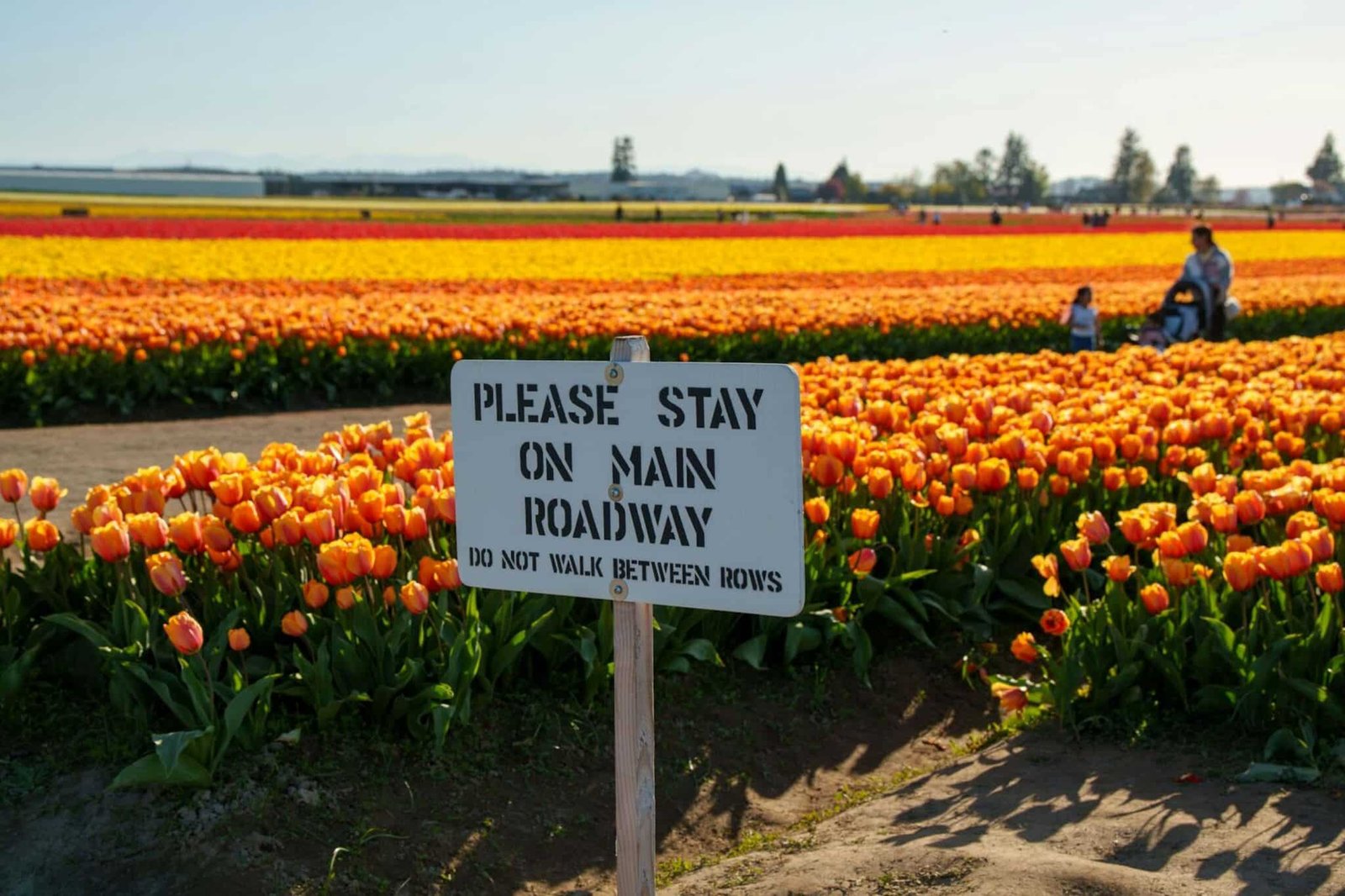
Avoid stepping into restricted areas or picking flowers unless it’s clearly allowed. Respecting the space ensures that future visitors can enjoy the same beauty. It also supports the farmers who make the festival possible each year.
Capture Better Photos Without the Stress
Photography is a big part of the experience, but timing is crucial. Early morning and late afternoon provide softer light and fewer crowds.
Look for angles that show depth across the rows. Include mountains or sky when possible. And don’t rush. Some of the best shots come when you slow down and wait for the right moment.
Final Thoughts
Your first visit to the Skagit Valley tulip gardens can feel both dazzling and full of discovery. With the right timing, planning, and mindset, you’ll avoid common frustrations and spend more of your day immersed in the valley’s colors and scenery.
Now that you know what to expect, you’re ready to turn a simple flower trip into a memorable spring experience.