South Asia asks for more than a brief visit. It reveals itself gradually, not at a glance. Distances are long, cities move at full pace, and the cultural layers run deep. You’re encountering living traditions rather than preserved relics: morning rituals along wide riverbanks, mountain communities shaped by seasonal rhythms, colonial-era tea routes that still function as active transport corridors.
Moving through the region requires practical awareness, knowing which train station to use, which streets slow by midday, when walking makes more sense than taking a car. When approached with the right preparation, exploring South Asia isn’t inherently complicated. It simply demands context, local insight, and realistic pacing.
Spiritual Journeys Along the Sacred Ganges and Brahmaputra in India
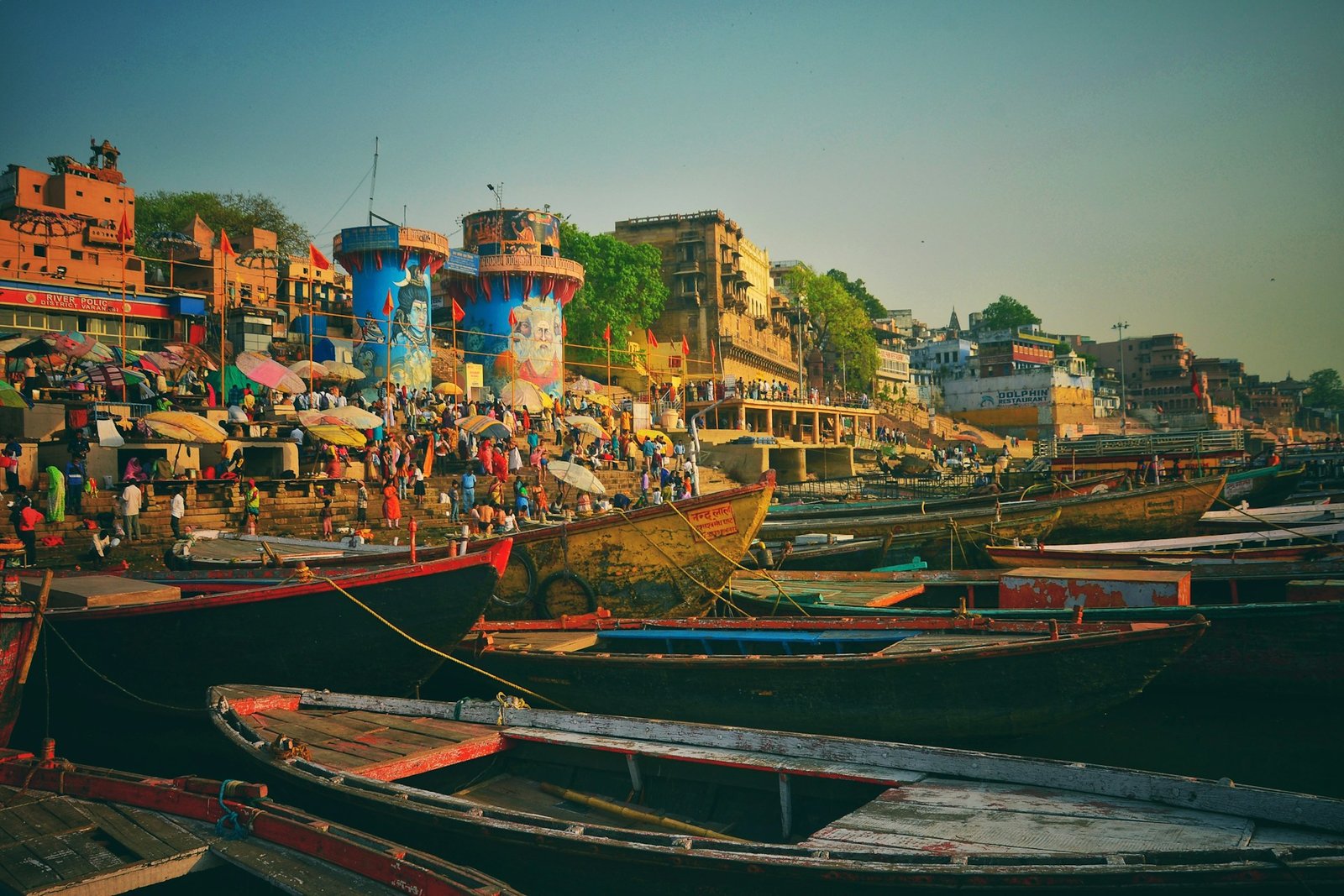
On the ghats of Varanasi, mornings begin before the traffic does. At Dashashwamedh Ghat, priests prepare offerings as wooden boats drift along the Ganges and the first light settles over the stone steps. Walking from Assi Ghat north toward Manikarnika Ghat reveals the continuum of ritual life: pilgrims bathing, families performing cremation rites, students practicing yoga at the river’s edge. Experiencing this stretch on foot offers a clearer understanding of how faith shapes daily life here, far beyond the well-known evening aarti ceremony.
Further east, the scale shifts along the Brahmaputra River in Assam. Boarding near Pandu in Guwahati for adventure on an Indian river cruise introduces a slower, expansive landscape of sandbanks and distant villages. Many itineraries include Majuli Island, home to centuries-old Vaishnavite monasteries where monks continue to perform traditional dance-drama rooted in devotional storytelling.
Back in Guwahati, the climb to Kamakhya Temple places visitors within one of the region’s most significant Shakti pilgrimage sites. Together, these experiences reveal South Asia’s spiritual life not as spectacle, but as something active and deeply embedded in place.
Exploring the Ancient Buddhist Ruins and Tea Culture of Sri Lanka
Sri Lanka’s Cultural Triangle reveals South Asia’s heritage through living history rather than monuments alone. In Anuradhapura, the sacred Sri Maha Bodhi and vast stupas such as Ruwanwelisaya reflect the spiritual foundations of early civilisation. Cycling between the scattered ruins allows time to absorb both scale and symbolism.
At Sigiriya, frescoes and landscaped water gardens demonstrate sophisticated 5th-century urban planning, while the summit views reveal how power was embedded into the landscape. Further south, Kandy centres on the Temple of the Sacred Tooth Relic, where daily rituals continue centuries-old Buddhist traditions.
The journey into the highlands towards Nuwara Eliya adds a colonial layer. Tea estates and the 19th-century railway speak to the plantation economy that reshaped the island. Together, these experiences highlight how Sri Lanka’s cultural identity has evolved across kingdoms, faith and empire, offering a compact yet deeply layered introduction to South Asia.
Himalayan Traditions and High-Altitude Trekking in Nepal
Nepal offers one of South Asia’s most layered cultural experiences, beginning in Kathmandu. Arriving early at Kathmandu Durbar Square reveals temple courtyards before they get crowded, allowing space to notice carved struts and living shrines woven into daily life. A short journey leads to Boudhanath Stupa, where pilgrims circle the dome clockwise at dawn, spinning prayer wheels in a slow, deliberate motion. These are not preserved relics but active spiritual centres that shape the capital’s pace.
Outside the city, the cultural focus shifts to the mountains. If you want to understand how culture and geography remain closely intertwined in the high Himalayas, try trekking in Nepal. Routes through the Annapurna region or towards Namche Bazaar pass through functioning trading towns.
Saturday markets, shared tea houses and the daily ritual of dal bhat illustrate how communities are shaped by altitude, historic trade routes and seasonal movement. The experience is defined less by dramatic peaks than by the quiet realities of daily life, where routines, livelihoods and social ties continue to adapt to the demands of mountain terrain.
The Architectural Marvels of Bhutan’s Fortress Monasteries
Bhutan’s dzongs are administrative centres as much as religious monuments. In Thimphu, Tashichho Dzong sits beside the Wang Chhu River. Visits are typically timed for late afternoon, when offices close, and monks begin evening prayers. Moving between Thimphu and Punakha means crossing the Dochula Pass, where 108 chortens line the ridge. On clear days, the Himalayan peaks are visible; on misty afternoons, traffic slows along the bends, so early departures are more reliable.
In Paro, the hike to Paro Taktsang is steady rather than steep at first, but the final stair section narrows considerably. Starting before 8 am reduces foot traffic on the path. Punakha Dzong, positioned at the confluence of two rivers, is accessed via a wooden cantilever bridge.
During festival periods, queues form at the entrance checkpoints; guides coordinate timings carefully to keep tourists moving. Unlike larger South Asian cities, Bhutan’s urban centres are compact, making it easy to walk between hotels and main streets. The official dress codes are strictly observed inside religious complexes, which some visitors occasionally overlook.
Historical Landmarks and Coastal Heritage in Pakistan
In Lahore, the Mughal core is compact enough to explore on foot. The courtyard of the Badshahi Mosque fills quickly on Friday afternoons, so weekday mornings are much easier to explore. From there, entering the Walled City through Delhi Gate leads into narrow lanes where spice sellers and metalworkers still operate. The Fort sits adjacent, but security checks can cause delays during peak domestic tourism periods. Walking rather than driving between these sites avoids gridlock on Circular Road.
Further south in Sindh, the vast Makli Necropolis stretches over rolling ground outside Thatta. It feels remote, windswept, and more expansive than expected. Exploring by vehicle between clusters of tombs saves time in the heat. In Karachi, Clifton Beach is more of a social space than a swimming spot. The surrounding streets near Saddar offer markets selling textiles and handicrafts; stepping a few blocks away from the busiest junctions usually reveals better-value shopping.
Karachi’s traffic is notoriously unpredictable, so separating coastal visits from central heritage sites makes for a more manageable and realistic day. Pakistan’s cultural heritage is layered and sometimes overlooked, but it rewards those who approach it with patience and logistical awareness.
Which South Asian culture will you discover?
It depends on what kind of cultural depth your group is ready to engage with. That might mean standing on the ghats of Varanasi at sunrise, following the scent of incense and woodsmoke along the river, or tracing the remains of ancient kingdoms across Sri Lanka’s dry plains. It could involve sharing tea with Sherpa families in Nepal, stepping through the courtyards of Bhutan’s dzongs as monks gather for prayer, or walking Lahore’s Walled City, where Mughal history still shapes daily life. South Asia offers living traditions rather than staged spectacles, and whichever culture you choose to explore will shape the tone and direction of the entire journey.
Photo by Pratish Srivastava on Unsplash