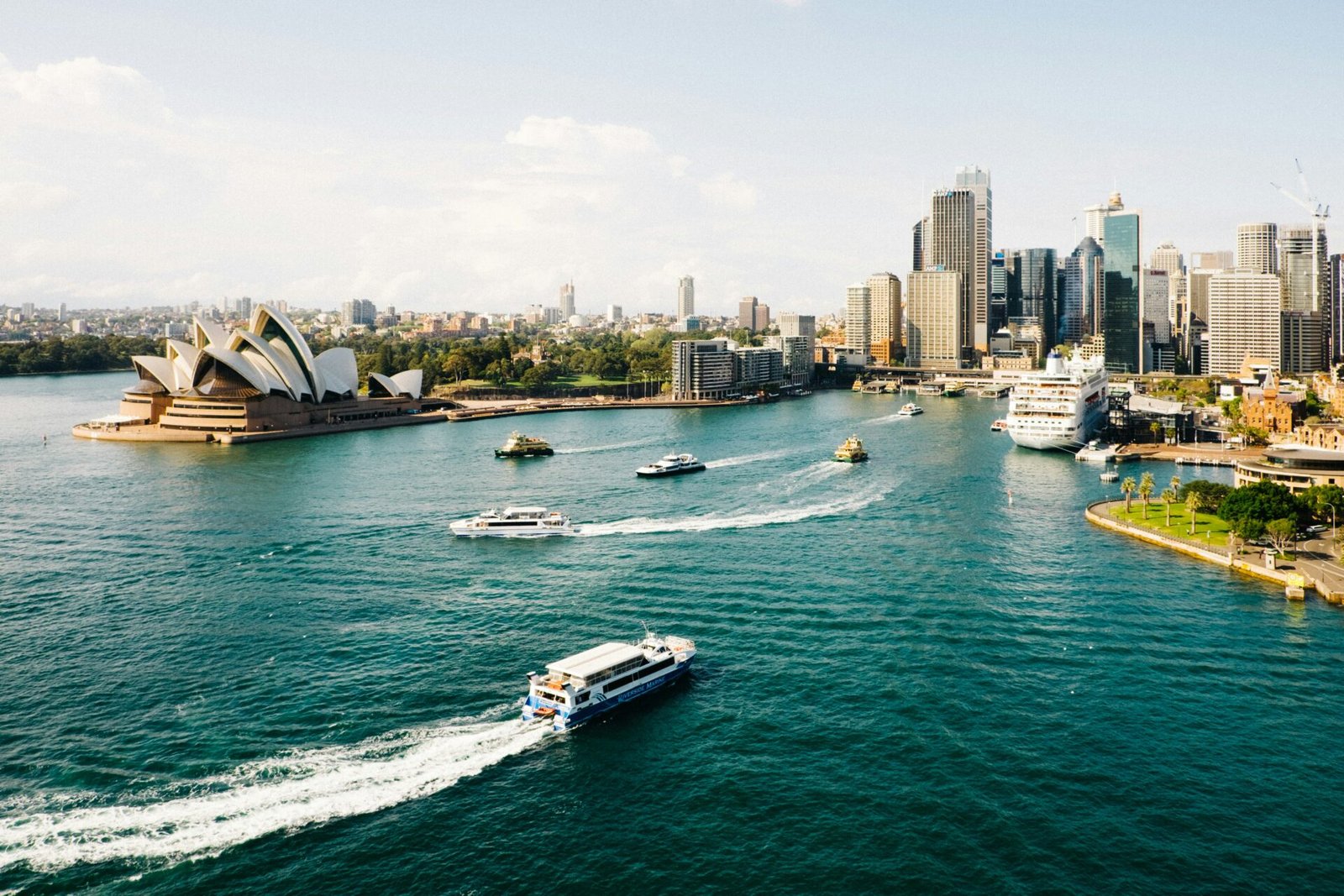
Beaches, coastal walks, and a vibrant food scene, Sydney offers families a rare combination of natural beauty and urban ease that makes it one of the world’s most rewarding warm-weather destinations.
Sydney in summer has a quality that is difficult to put into words without resorting to cliché. The light is particular here, catching the water in ways that make even an ordinary Tuesday feel like something worth noticing. For families, it delivers ease and excitement in equal measure.
From December through February, Sydney is at full pace. School is out, the long evenings stretch past eight o’clock, and the city’s outdoor life unfolds reliably and without fanfare. This is a place built for living well in the sun, and nowhere is that more evident than along its extraordinary coastline.
The Beaches
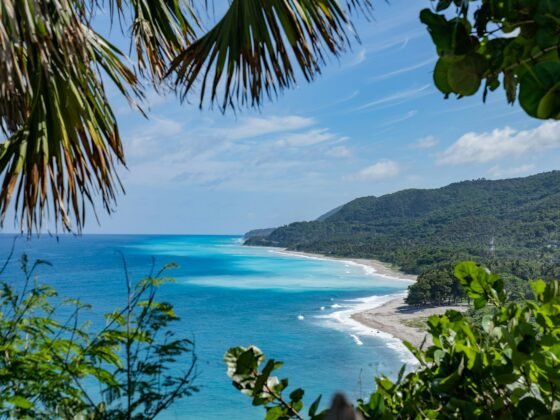
A coastline for every kind of day
Bondi is, of course, the name everyone knows, and rightly so. The iconic crescent of sand backed by its low-slung promenade remains one of the great urban beaches anywhere on earth. In summer it is alive from first light: serious swimmers carving lanes in the Bondi Icebergs pool before 7am, families staking out their patch of sand by mid-morning, teenagers doing precisely the things teenagers do at beautiful beaches. It is loud and joyful and irreplaceable.
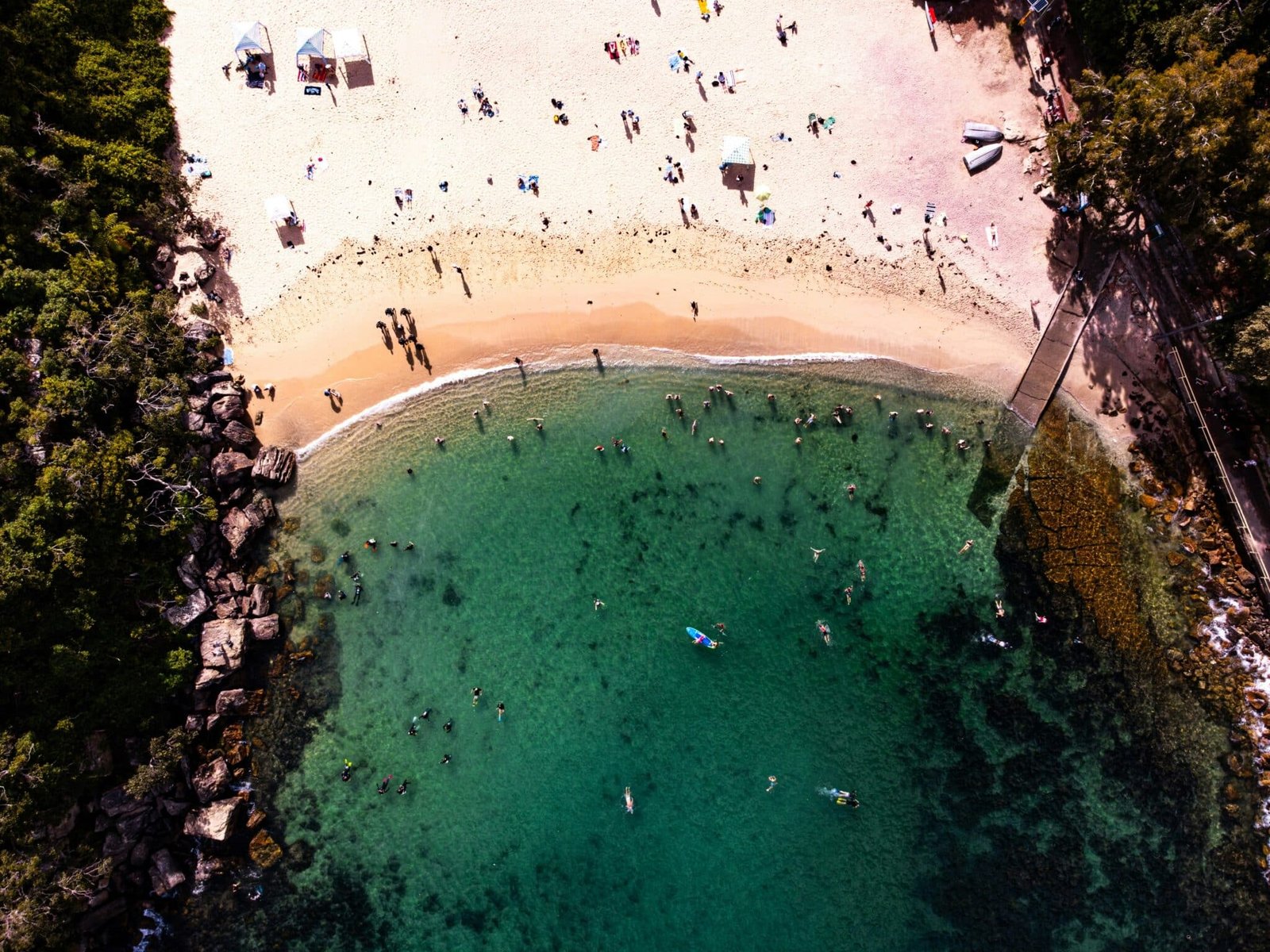
But Sydney’s coastline rewards those who look a little further. Manly Beach, reached by a short ferry ride across the harbour, offers a slower pace and a long esplanade of cafés suited to unhurried mornings. Shelly Beach, tucked just south of Manly, is a sheltered cove ideal for snorkelling with younger children, its calm waters home to curious fish and the occasional blue grouper. Further south, Coogee and Maroubra cater well to families, with wide lawns behind the sand, rock pools at low tide, and a less crowded atmosphere than their famous neighbour. Staying close to these quieter beaches, in a house rather than a hotel, is increasingly how families get the most out of the coast; Cocoon Luxury Properties has a number of homes in exactly these neighbourhoods.
“Sydney’s coastline rewards those who look beyond the famous postcard, quiet coves, harbour pools, and headland walks that feel like well-kept secrets.”
Walks & Outdoor Life
On foot, the city reveals itself
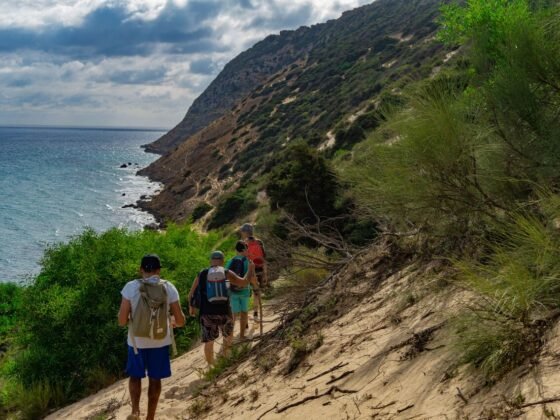
One of Sydney’s underrated qualities is its walkability, not in the urban pavement-pounding sense, but in the sense that spectacular trails connect beaches, run around headlands, and pass through national parks that press right up against the suburbs. The Bondi to Coogee coastal walk is essential: six kilometres of sandstone clifftops with the sea below and a new bay around every bend. With children, allow the best part of a morning. There are rock pools to investigate, a cemetery of unexpected beauty at Waverley, and the obligatory ice cream stop at Clovelly.
North of the harbour, the Spit to Manly walk winds through eight kilometres of Garigal National Park bushland, a genuine wilderness sitting twenty minutes from the CBD. The contrast is startling: kookaburras call from the gum trees, the undergrowth moves with skinks, and the harbour appears in blue glimpses through the canopy. For families with older children, this is the kind of walk that gets talked about long after the holiday is over.
Closer to the city, the Royal Botanic Garden runs along the foreshore from the Opera House to Farm Cove. On a summer morning, before the heat builds, it is among the most pleasant places in the city to spend an hour or two. Children are reliably enchanted by the ibis and cockatoos; parents by the view of the Opera House framed by Moreton Bay figs.
Where to Eat
A food city that takes children seriously
Sydney’s restaurant culture has matured considerably over the past decade. The city now offers strong dining across every price point and cuisine, and, crucially for travelling families, an attitude toward children that is warm rather than merely tolerant. Beachside cafés in Bondi, Bronte, and Freshwater have mastered the balance of serving excellent coffee to parents while keeping smaller guests perfectly happy. The new Sydney Fish Market, which opened in January 2026 in a striking new harbourside building at Blackwattle Bay, designed by Danish architects 3XN and doubling the size of the old Pyrmont site, is a non-negotiable stop. The largest fish market in the southern hemisphere, it is a vast, energetic space where you eat prawns and oysters on the waterfront promenade and watch live fish auctions through the glass façade, feeling very much that you are doing Sydney correctly. In the inner suburbs, Surry Hills and Newtown offer a dense concentration of good casual restaurants covering Thai, Vietnamese, Japanese, and Lebanese, where families eat well without spending a great deal.
Where to Stay
Choosing the right part of the city
Where you base yourself shapes the holiday entirely. Sydney’s best neighbourhoods for families are concentrated in the eastern suburbs and across the harbour to the north, and each has a distinct character worth considering. Vaucluse, perched on the upper harbour, is among the most tranquil corners of the city: leafy, unhurried, and close to Nielsen Park and the Hermitage Foreshore walk, where the harbour feels almost private. It suits families who want green space and quiet within easy reach of the action. Coogee, further south along the coast, offers something more immediately holiday-like, a long, patrolled beach, a relaxed main strip, and a genuinely neighbourly atmosphere that makes it easy to settle into a rhythm quickly.
North of the harbour, Manly and Mosman are the obvious choices. Manly needs little introduction, the beach, the ferry, the Norfolk pines, but it rewards longer stays in ways that a day trip cannot. Mosman, quieter and more residential, sits between Taronga Zoo and a string of small harbour beaches, and has the kind of leafy, calm streets that make mornings with children genuinely pleasant. For families looking to explore these neighbourhoods in depth, Cocoon Luxury Properties has properties across all of them, each selected for its position and quality.
The Case for Sydney
Why now, and why here
Sydney in summer is not without its challenges: crowds at the most popular beaches, the cost of living in an expensive city, the occasional forty-degree day that drives everyone indoors. But these are minor qualifications against an overwhelming argument in the city’s favour. The infrastructure for family travel is excellent. The ferry network is genuinely world-class. The beaches are patrolled by professional lifeguards. The food is good, and the people are, on the whole, remarkably good-natured about small humans running between their tables.
More than any of this, Sydney has something harder to manufacture: a quality of daily life that is palpable and, once you notice it, rather infectious. You feel it on the Bondi coastal walk when the path rounds a headland and the sea comes into view. You feel it at the Fish Market, eating a prawn and watching pelicans work the dock. You feel it on the ferry from Manly, with the Opera House behind you and the open harbour ahead.
Children absorb this without thinking about it. It works on adults too, including the most well-travelled and hard-to-impress among them. Sydney does not ask you to conquer it. It invites you to show up and pay attention. Families who accept that invitation rarely leave without talking about when they might come back.
Image: Unsplash, Dan Freeman