In a world increasingly defined by speed, few cities reward slowness like Istanbul. Spanning Europe and Asia, ancient and modern, imperial and intimate, this is a place that unfolds gradually. To truly understand it, you must resist the urge to rush.
Welcome to Istanbul through the lens of slow travel where experience matters more than checklists, and presence outweighs pace.
Why Istanbul Is Perfect for Slow Travel
Istanbul is not a city to “complete.” It is a city to inhabit, even briefly. Its character reveals itself in neighborhood bakeries at sunrise, on ferry decks at dusk, and in conversations over tea that stretch far longer than planned.
Slow travel here means choosing depth over distance. It means spending an entire afternoon in a single district rather than racing between monuments. It means returning to the same café twice. It means learning the rhythm of daily life.
This approach not only creates richer memories but also supports local communities, independent businesses, and the preservation of cultural heritage.
Kuzguncuk: Village Calm on the Asian Shore
On the Asian side of the Bosphorus lies Kuzguncuk, a former fishing village that feels worlds away from the city’s intensity.
Colorful wooden Ottoman houses line quiet streets. Small art studios sit beside neighborhood grocers. Religious buildings of different faiths stand within walking distance of one another, reflecting centuries of coexistence.
Spend your morning wandering Icadiye Street. Step into a bookstore. Sit in a garden café. Walk uphill to Fethi Paşa Grove and take in one of the finest Bosphorus panoramas. There is no rush here and that is precisely the point.
Arriving by ferry enhances the experience. The crossing itself becomes part of the day, not just transportation.
Balat: Memory in Motion
Across the Golden Horn, Balat offers another dimension of the city’s layered identity.
Its narrow cobbled streets rise and fall between brightly painted houses. Laundry lines stretch overhead. Antique shops spill onto sidewalks. Local residents sit outside discussing the day.
The monumental red-brick structure of Phanar Greek Orthodox College dominates the skyline, reminding visitors of the district’s deep historical roots.
A slow walk through Balat is not about photography alone. It is about noticing door knockers worn smooth by time, listening to church bells echo across the water, and understanding that heritage here is lived not staged.
Ferry Life: The City’s Beating Heart
To travel slowly in Istanbul, you must step aboard a ferry.
Operated by Şehir Hatları, these boats are part of daily life. Commuters, students, families, and visitors share the same deck.
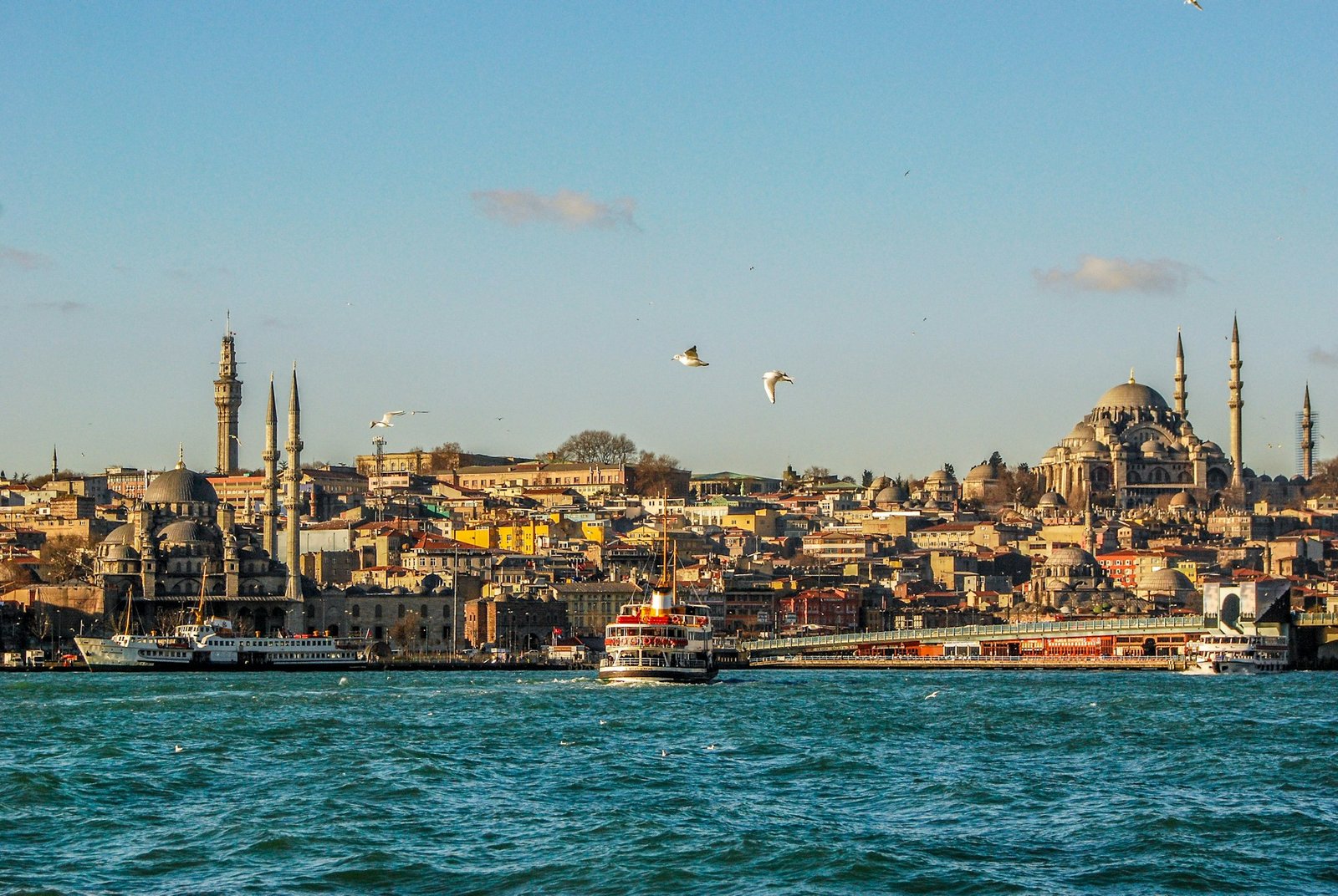
Order tea served in a small tulip-shaped glass. Sit outside if the weather allows. Watch seagulls trace the wake behind you. The skyline shifts with every minute: domes, minarets, palaces, modern towers.
Few experiences offer better Bosphorus views than a simple public ferry ride at sunset.
Eating Slowly: The Soul of the Table
Food in Istanbul tells stories of migration, empire, and regional diversity. To eat slowly here is to eat thoughtfully.
Choose a small neighborhood lokanta serving seasonal stews. Visit a weekly produce market. Taste olive oil from the Aegean and cheese from eastern Anatolia. Ask about recipes. Listen to how dishes have evolved over generations.
Authenticity lies not in luxury but in continuity in kitchens where traditions are preserved daily.
By supporting independent restaurants and artisans, travelers help sustain culinary heritage that might otherwise fade under mass tourism.
Structuring Time Without Overplanning
Many visitors attempt to compress Istanbul into two or three days. Slow travel suggests another approach.
Dedicate time by district rather than by monument.
Spend two days on the Historic Peninsula, exploring early in the morning and retreating to quieter streets by afternoon. Devote a full day to the Asian side Kuzguncuk, Kadıköy, Moda. Allow another day for Balat and the Golden Horn.
Leave space for repetition. If a place resonates, return to it. Familiarity deepens connection.
For those who appreciate thoughtful structure without feeling rushed, working with experienced local planners can make a meaningful difference. Carefully curated city experiences offered by Mokan Travel focus on flexibility and depth, ensuring that exploration feels organic rather than hurried. With knowledgeable, licensed guides and attention to pacing, visits become conversations rather than lectures.
Responsible Travel in a Megacity
Istanbul is home to more than fifteen million people. Respectful travel matters.
Use public transportation when possible. Carry a reusable bottle. Dress appropriately in mosques. Ask permission before photographing individuals. Choose small-group or private experiences that reduce pressure on fragile sites.
Heritage conservation is an ongoing effort. Visitors who move thoughtfully contribute to its protection.
Professional, locally trained guides provide essential context not just historical facts, but insight into preservation challenges and community life.
Arriving Calmly
Istanbul is served by two major airports:
- Istanbul Airport
- Sabiha Gökçen International Airport
After a long journey, the first hour in a new city shapes your impression. Navigating traffic and unfamiliar transit systems can be tiring. For airport transfers
istanbul airport transfer and sabiha gökçen transfer.
Arranging a smooth transfer with a reliable local provider ensures a gentle introduction. Services such as those organized by Mokan Travel prioritize punctuality, professionalism, and comfort, allowing visitors to begin their stay with ease rather than stress.
From there, the city opens naturally.
Slow travel thrives in lesser-known districts.
Yeldeğirmeni offers street art and independent cafés. Cihangir blends literary history with contemporary culture. Moda’s seaside promenade invites long evening walks. Neighborhood markets in Beşiktaş provide glimpses of everyday commerce.
Each area contributes to a personal map of the city one built on experience rather than attraction lists.
The Best Bosphorus Perspectives
While organized cruises exist, some of the most memorable views come from quieter vantage points.
Climb Pierre Loti Hill early in the morning. Visit Fethi Paşa Grove at golden hour. Take the longer ferry route north toward Anadolu Kavağı.
These moments encourage stillness. They allow the city’s scale to settle gradually into understanding.
Cultural Sensitivity and Human Connection
Slow travel emphasizes exchange over observation.
Learn a few Turkish phrases. Accept tea when offered. Engage shopkeepers in conversation. Listen more than you speak.
In neighborhoods like Balat and Kuzguncuk, daily routines continue regardless of tourism. Respect ensures authenticity remains intact.
Istanbul’s greatest asset is not its monuments but its people.
Two Continents, One Rhythm
Istanbul bridges land and water, tradition and innovation, Europe and Asia. Its contrasts are not contradictions but harmonies.
To move quickly through it is to skim the surface. To move slowly is to understand its cadence.
Watch fishermen at dawn on Galata Bridge. Hear the call to prayer echo across the Bosphorus. Share a meal that stretches into the evening.
With thoughtful pacing, reliable local expertise, and a willingness to immerse rather than consume, Istanbul reveals itself as more than a destination.
It becomes an experience of continuity two continents, one soul, unfolding at the speed you allow it.
Photo by Engin Yapici on Unsplash