As you slip into the water from the boat, you enter a small, private world. There is nothing but the soft gurgle of the ocean and the steady swoosh of your own breath through the snorkel.
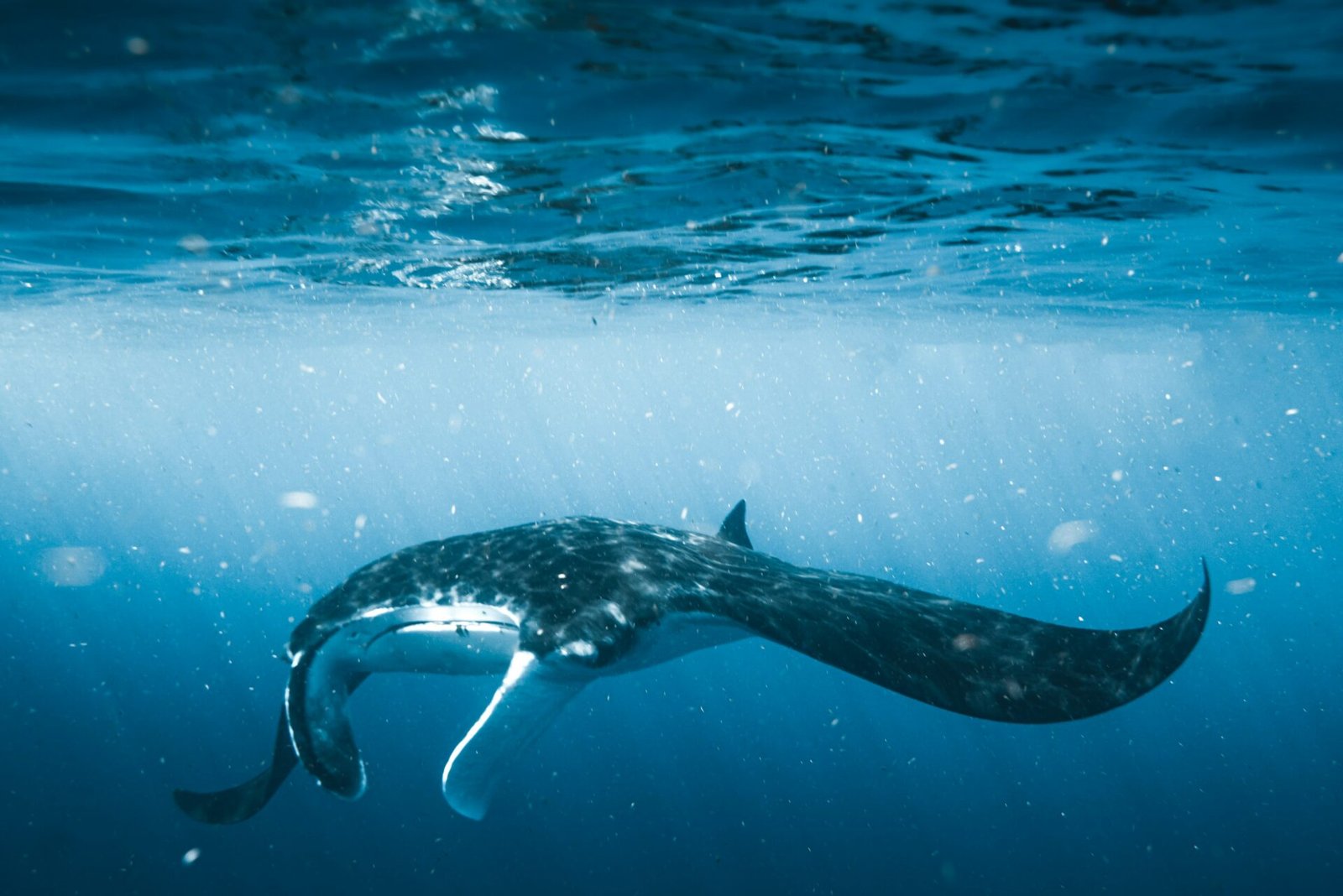
Then, out of the blue, a manta ray appears. With a slow swirl of wings it glides past, turning with effortless grace. A wave lifts you briefly to the surface. You raise your head, reorientate, hear the distant chug of a boat, the splash of other snorkellers, the muffled excitement of voices above the water. Someone points. You lower your face again. Stay still. Breathe. Wait…
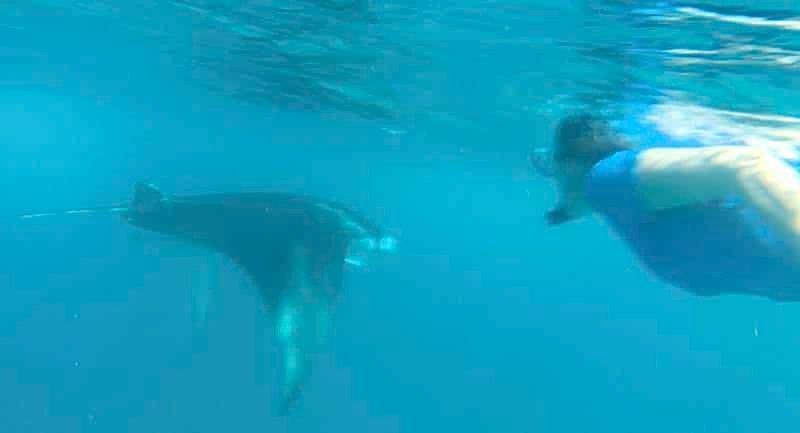
Snorkelling with manta rays is one of the ocean’s most quietly powerful wildlife experiences.
Mantas are incredibly sensitive animals, yet they are also naturally curious. In my experience, when approached without expectation or urgency, they will often choose to come closer. Give them space, and the encounter becomes something far richer than a fleeting sighting.
Where to See Manta Rays
Some of the world’s best places to see, and responsibly swim with, manta rays include the Maldives, Thailand, Australia (particularly the Ningaloo Coast), Indonesia (Raja Ampat and Komodo), Hawaii (Kona), Micronesia (Yap), Mexico (the Socorro Islands), Costa Rica and Ecuador.
Among them, the Maldives stands out for the accessibility of encounters, warm water snorkelling, and a long history of manta research and protection. However, as manta tourism grows globally, ecotourism is not always consistently regulated. This is something I have seen first-hand while swimming with both whale sharks and manta rays in the Maldives.
As travellers, we can help by educating ourselves, understanding manta behaviour, and following clear codes of conduct. How these encounters are managed matters more than ever.
About Manta Rays
Manta rays are highly intelligent, slow-reproducing animals. Females give birth to a single pup after a long gestation period, making populations particularly vulnerable to pressure and disturbance. They are also extremely sensitive to changes in their environment and to human behaviour around them.
This sensitivity is precisely why responsible encounters matter. When mantas feel threatened or crowded, they will abandon feeding or cleaning behaviour. When they feel safe, they often remain, circle and observe.
Reef Mantas vs Oceanic Mantas
There are two species of manta ray, and understanding the difference helps explain why certain destinations are so important.
Reef mantas are coastal and site-faithful, returning repeatedly to the same feeding areas and cleaning stations. They are the smaller of the two species, with a wingspan of up to around five metres. Because they rely on specific sites year after year, disturbance, particularly at cleaning stations, can have long-term consequences.
Oceanic mantas, also known as pelagic mantas, are larger, reaching up to seven metres across. Often darker in colour, they roam vast areas of open ocean and migrate over long distances. They are far less predictable and only occasionally encountered while snorkelling.
Threats to Manta Rays
Despite their size and global appeal, manta rays face growing pressure. Both reef mantas and oceanic mantas are currently listed as Vulnerable on the IUCN Red List, reflecting population declines across much of their range.
The primary threats include targeted and incidental fishing, particularly for gill plates used in traditional medicine, as well as bycatch in industrial fisheries. Habitat degradation, boat strikes and poorly managed tourism, especially at feeding and cleaning sites, also pose significant risks.
Climate change adds another layer of uncertainty. Rising ocean temperatures and shifting currents can disrupt plankton availability, directly affecting manta feeding behaviour and long-established aggregation sites.
This context is critical. Responsible tourism is not just about a better experience for travellers. It plays a real role in demonstrating that manta rays are worth far more alive than exploited.
Manta Rays and Ecotourism
Manta rays are economically valuable when protected. According to the Manta Trust, tourists spend an estimated US$140 million every year to see manta rays in the wild.
This figure highlights an important truth. When managed responsibly, manta tourism can provide powerful, long-term incentives for protection, research and habitat conservation. When poorly managed, it risks doing the opposite.
Why the Maldives Is a Global Manta Hotspot
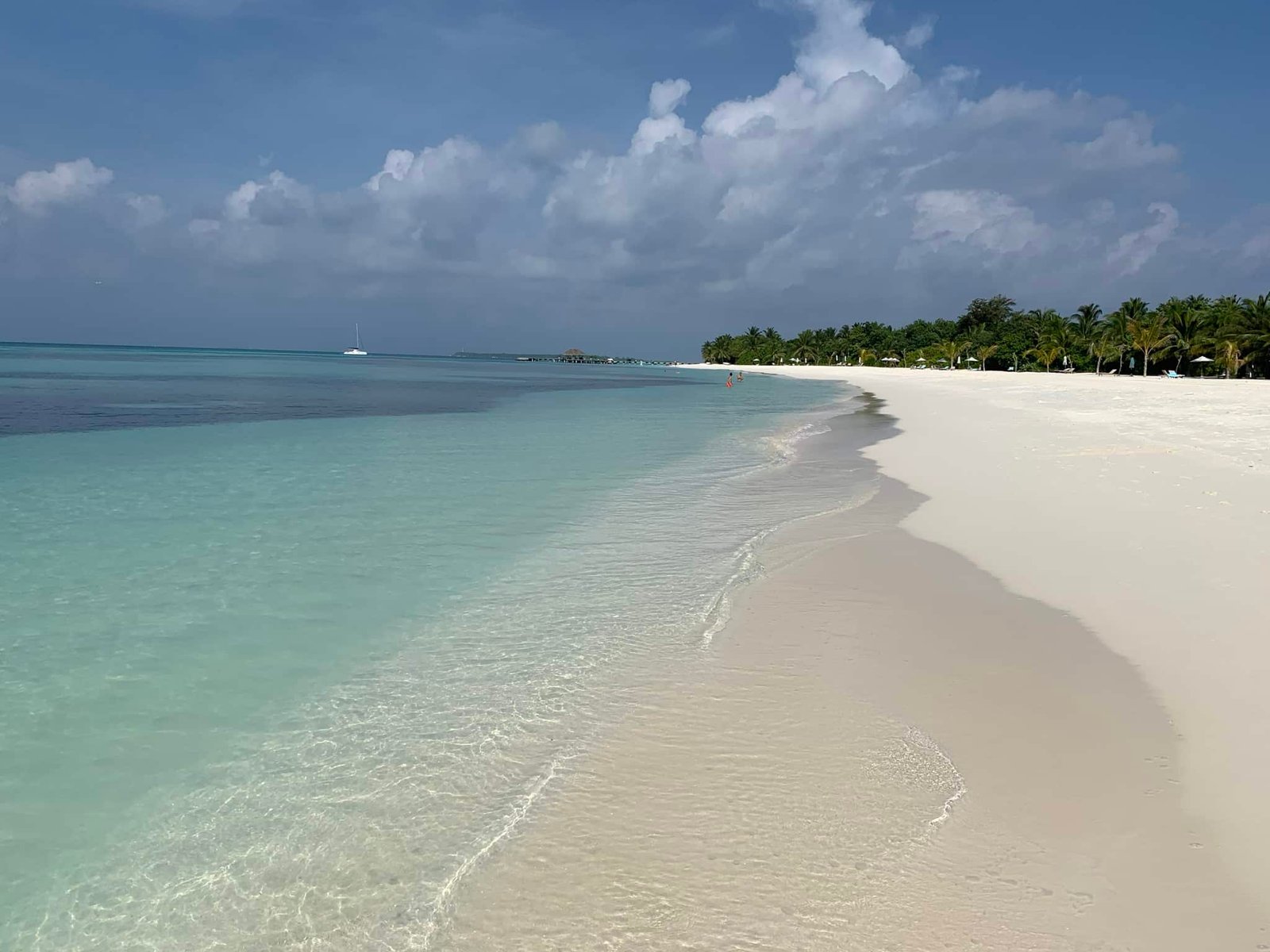
The Maldives’ unique geography plays a major role in its manta success story. A chain of low-lying coral atolls shaped by seasonal monsoon currents creates ideal conditions for plankton blooms.
As nutrient-rich water is funnelled through channels and lagoons, mantas gather to feed, often close enough to reefs and shorelines to be observed by snorkellers. For travellers, this means encounters that feel calm, natural and unforced, without the need for deep-water diving.
When Is the Best Time to See Manta Rays in the Maldives?
Manta sightings in the Maldives are closely tied to monsoon cycles rather than simple dry season logic.
May to November (South-West Monsoon)
This is generally the best period for manta encounters on the western sides of the atolls, when plankton concentrations are highest. Baa Atoll, including Hanifaru Bay, is particularly well known during this season.
December to April (North-East Monsoon)
Mantas tend to shift toward eastern reefs, with sightings often more dispersed. My own encounter with mantas took place in Ari Atoll in December, showing that excellent sightings are still possible outside peak months.
Conditions vary year to year, and visibility is not always a reliable indicator. Plankton-rich water may look less clear, but it is exactly what mantas are feeding on.
Where to Snorkel with Mantas in the Maldives
Several regions have become particularly important for manta conservation and responsible encounters:
Baa Atoll
A UNESCO Biosphere Reserve and one of the world’s most significant seasonal manta aggregation sites. The Manta Trust was based here for many years conducting the Maldives Manta Conservation Programme.
Raa Atoll
Now home to a Manta Trust research base at InterContinental Raa Atoll, supporting ongoing monitoring and conservation work.
Ari Atoll
Known for manta cleaning stations and feeding areas, often combined with whale shark encounters.
South Malé Atoll
More accessible from Malé, with year-round manta potential at certain sites.
Laamu Atoll
Home to a long-running Manta Trust monitoring programme based at Six Senses Laamu.
Choosing the right operator is as important as choosing the right location. Researching operators that follow recognised codes of conduct, such as those aligned with Swim With Mantas, helps ensure encounters remain ethical and sustainable.
How to Swim with Mantas
Ethical manta encounters are calm, passive and manta-led. Responsible operators will brief guests thoroughly before entering the water, explaining what to expect and how to behave. They will limit numbers in the water, maintain minimum distances, and avoid blocking feeding or cleaning behaviour.
Best-practice guidelines, including those promoted by Swim With Mantas, focus on reducing stress and allowing mantas to behave naturally. For snorkellers, the golden rule is restraint. Float quietly, observe, and let the encounter unfold.
This is not always easy when adrenaline surges and excitement peaks, which is why education matters. The more you understand manta behaviour, the better equipped you are to act responsibly in the moment.
Personal Experience
In Australia, I joined a boat trip at Ningaloo primarily to see whale sharks, but we were fortunate to encounter both whale sharks and oceanic mantas.
Throughout the trip, briefings were detailed, protocols were strict, and there was a strong emphasis on education and conservation. Most participants were genuinely engaged and invested in the experience.
By contrast, I found regulation in the Maldives to be more inconsistent, with swimmers of varying experience levels and a greater need for clearer guidance and education around wildlife behaviour.
A Future Built on Respect
The Maldives has played a leading role in manta research and conservation, with many resorts and operators contributing to identification programmes and long-term monitoring. When done responsibly, manta tourism supports local livelihoods while contributing to global conservation knowledge.
Done well, it remains one of the most rewarding wildlife encounters in travel.
Image at top: Andre Kaim