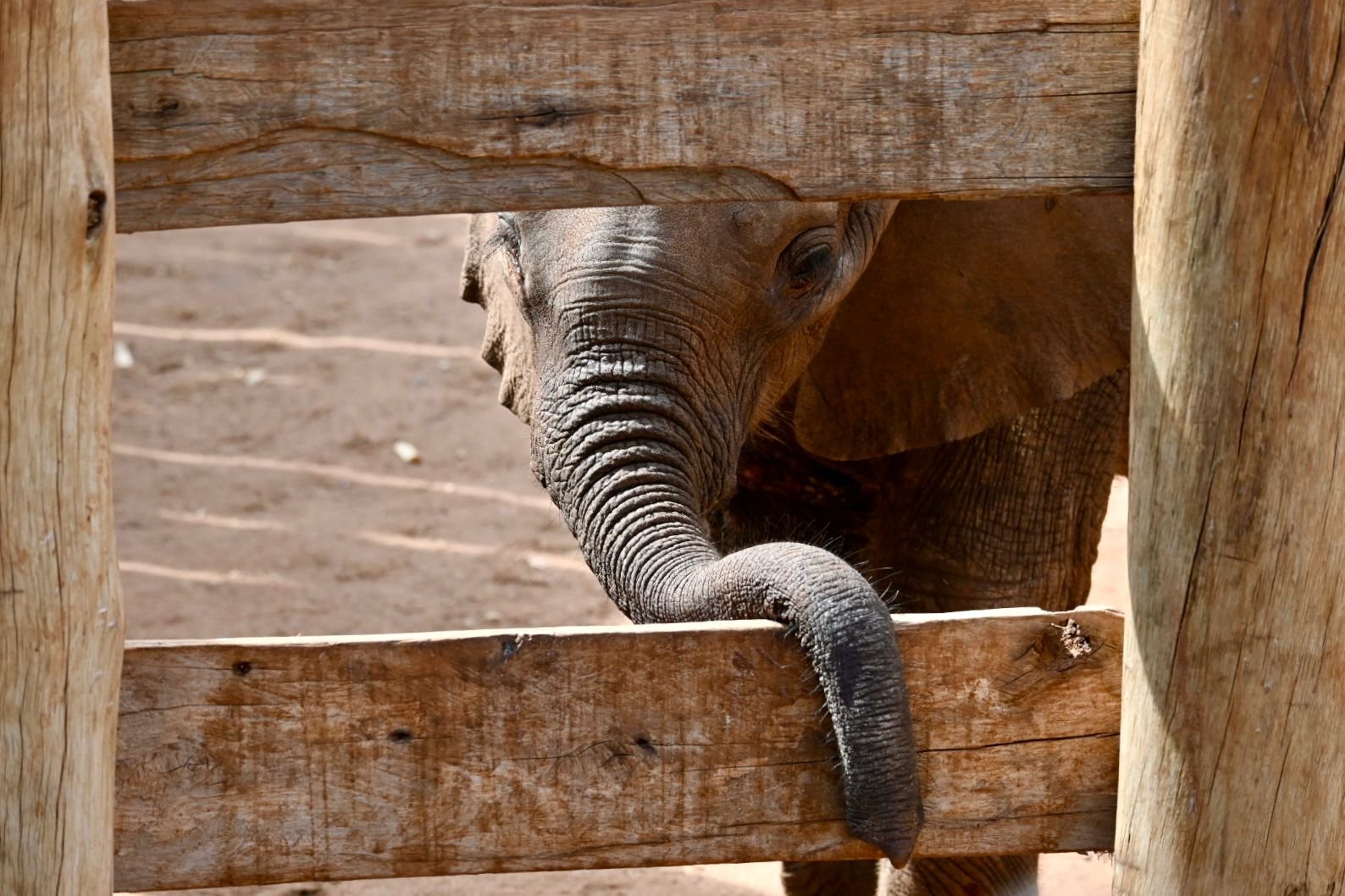
The first hint of dawn was on the horizon as we walked thorough the bush, our way lit by the light from our smartphones. The dusty trail weaved between acacia bushes and scrub until a fence of strong timber appeared before us. Somewhere beyond it, we could hear shuffling feet and the occasional impatient rumble.
We stopped and waited. Out of the darkness shapes appeared and trunks were gently stretched out between the uprights, smelling us, trying to reach us. One young elephant stood on a cross bar to raise himself up and stretched out to touch my hand, hoping it might contain a large milk feeding bottle. As we looked at each other it was a moment of connection I will always remember.
From Nairobi to Namunyak: Entering Another World
This journey had started a couple of days earlier, with a small aircraft lifting us out of the sprawl of Nairobi and into a different kind of Kenya entirely one that feels older, quieter, and deeply connected to the rhythms of the land.
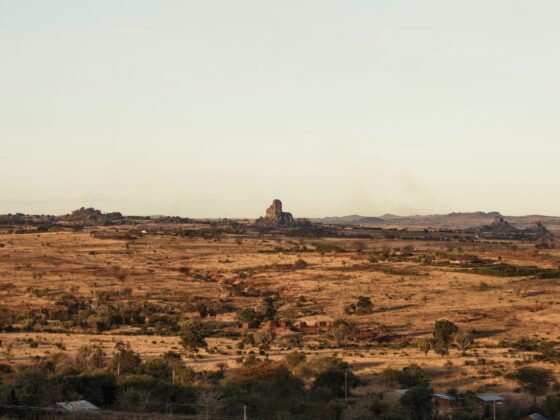
The flight north was short but transformative. The green patches around Nairobi slowly gave way to ochre earth, braided dry riverbeds, and scattered acacia trees. From above, the land looked vast and unbroken until you began to notice the subtle signs of life: a cluster of huts here, a line of livestock there.
We landed in Samburu and began the two hour journey north to Namunyak Community Conservancy. Initially the road was of smooth tarmac, one of the main roads connecting Kenya to Ethiopia and beyond. After an hour we turned off and this road wasn’t really a road at all, more a suggestion of a path winding through hills and open plains. It felt like we were driving into the margins of the map.
And in a way, we were.
Namunyak, meaning “place of peace” in the Samburu language, is one of Kenya’s most inspiring conservation success stories. This vast community conservancy is owned and managed by the Samburu people themselves, covering over 850,000 acres of rugged wilderness. It wasn’t always this way. Like many pastoral regions, the area once faced challenges from overgrazing, poaching, and limited economic opportunity.
But over the past two decades, something remarkable has happened here. The community has taken ownership of conservation not as an external imposition, but as a source of pride, identity, and livelihood.
Wildlife numbers have rebounded. Community led tourism has created sustainable income. Traditional knowledge has been integrated into conservation practices.
And at the heart of it all sits Retiti quietly redefining what conservation can look like.
Retiti: A Sanctuary Built by Community
Unlike many wildlife sanctuaries across Africa, Retiti is not run by a distant organisation or international NGO. It is community owned, community run, and deeply rooted in Samburu culture.
Here, the keepers are local men many of whom grew up herding livestock across this same landscape. Their understanding of animals isn’t academic; it’s lived. Watching them interact with the elephants, there’s a quiet confidence, a familiarity that doesn’t need explanation.
We arrived in the afternoon, just in time for feeding. When they want to call a baby elephant for feeding, they sing to them. The orphaned elephants came charging in from the bush in a flurry of dust and energy, each one with a distinct personality. Some were bold and impatient, trunks reaching eagerly for bottles. Others hung back, more cautious, watching before committing.
It was joyful, chaotic, and strangely intimate.
Each elephant here has a story most of them beginning with loss. Drought, human wildlife conflict, or natural separation from their herds. Retiti steps in at that fragile moment, offering not just survival, but a second chance.
And milk, lots of it.
The Milk Problem and Opportunity
Raising orphaned elephants is no small task. In their early months, they require feeding every three hours, around the clock. Traditionally, sanctuaries rely on imported human baby formula a solution that is both expensive and logistically complex. To this they add any number of other supplements, from honey to baobab tree powder, depending on the individual needs of specific elephants.
Standing there, watching litres upon litres being prepared, it became clear just how significant that challenge is.
Which is why the project we had come to support felt so meaningful.
Explorers Against Extinction are financing a milk pasteurization unit that will process milk collected from 22 Samburu villages. This milk will then be prepared specifically for the elephants safe, nutritious, and locally sourced.
It’s a simple idea, but one with far reaching impact.
It will dramatically reduce reliance on imported formula. It will provide income for pastoralist families. It will create a circular system rooted in the community.
It’s rare to see a solution that so neatly aligns conservation with livelihoods. Here, it feels not just possible but inevitable.
An Afternoon Feeding: Energy and Emotion
That first afternoon feeding stayed with me long after it ended.
There’s something deeply moving about watching a baby elephant drink from a bottle. It’s not just the novelty’ it’s the vulnerability. These are animals that, in the wild, would be surrounded by a complex social structure: mothers, aunts, older siblings.
At Retiti, that structure is rebuilt in a different form.
The keepers step into roles that go far beyond feeding. They comfort, guide, and protect. You can see it in the way the elephants respond leaning into them, following closely, seeking reassurance.
As the sun dipped lower, the energy shifted. The elephants wandered back toward the bush, dust settling behind them, the landscape returning to stillness.
We left quietly, knowing we’d be back before sunrise.
Before Dawn: The Weaning Herd
The second visit felt entirely different.
Arriving in the dark, guided only by torchlight and starlight, there was a sense of anticipation in the air. This wasn’t the lively, chaotic feeding of the afternoon. This was quieter. More deliberate.
The weaning herd slightly older elephants preparing for eventual reintegration into the wild approached with calm confidence. They knew the routine. They were more confident, more interested in us, keener to interact.
Bottles were handed out with practiced efficiency. There was less jostling, more order. These elephants were growing up.
And then, almost as quickly as it began, it was over.
The gate to their enclosure as opened and they head off with a few Samburu handlers to graze for the day in the sanctuary grounds, learning the skills that will allow them to be released back into the wild when they grew older. No fanfare. No hesitation. Just a steady, purposeful movement into the landscape that will one day be fully theirs again.
We stood there watching until they disappeared into the soft morning light.
It’s hard to describe that feeling. It wasn’t dramatic or overwhelming. It was quiet. Grounded. Hopeful.
Conservation That Feels Different
What struck me most about Retiti and about Namunyak as a whole was how different it felt from the usual conservation narrative.
There’s no sense of separation here between people and wildlife. No artificial boundary. Instead, there’s an understanding that both are part of the same system.
The Samburu community hasn’t just accepted conservation they’ve shaped it.
And that changes everything.
Elephants are not just protected; they are valued. Conservation is not imposed; it is owned. Solutions are not imported; they are created locally.
The milk pasteurisation project is just one example of this approach in action. It’s practical, grounded, and deeply connected to the realities of life here.
Reflections on Leaving
As we made the long journey back first across the dusty tracks of Namunyak, then by air to Nairobi I kept thinking about that early morning moment. The quiet departure of the weaning herd. The way they moved forward without looking back.
Travel often gives you big, dramatic memories. But sometimes, it’s the quieter ones that stay with you.
Retiti isn’t just a place you visit. It’s a place that shifts your perspective on conservation, on community, and on what’s possible when the two come together.
If you find yourself in northern Kenya, make the journey. Not just to see elephants but to witness a model of conservation that feels, quite simply, right.
And if you arrive before dawn, listen closely.
You might hear the low hum of voices in the dark, preparing bottles for a new day one that begins, as all good days do here, with care, patience, and the steady presence of something much larger than ourselves.
If you want to travel with purpose, book a trip to Retiti with Explorers Against Extinction. You will get to see the milk plant in operation and by travelling with them you will be supporting their conservation work at no cost to yourself.