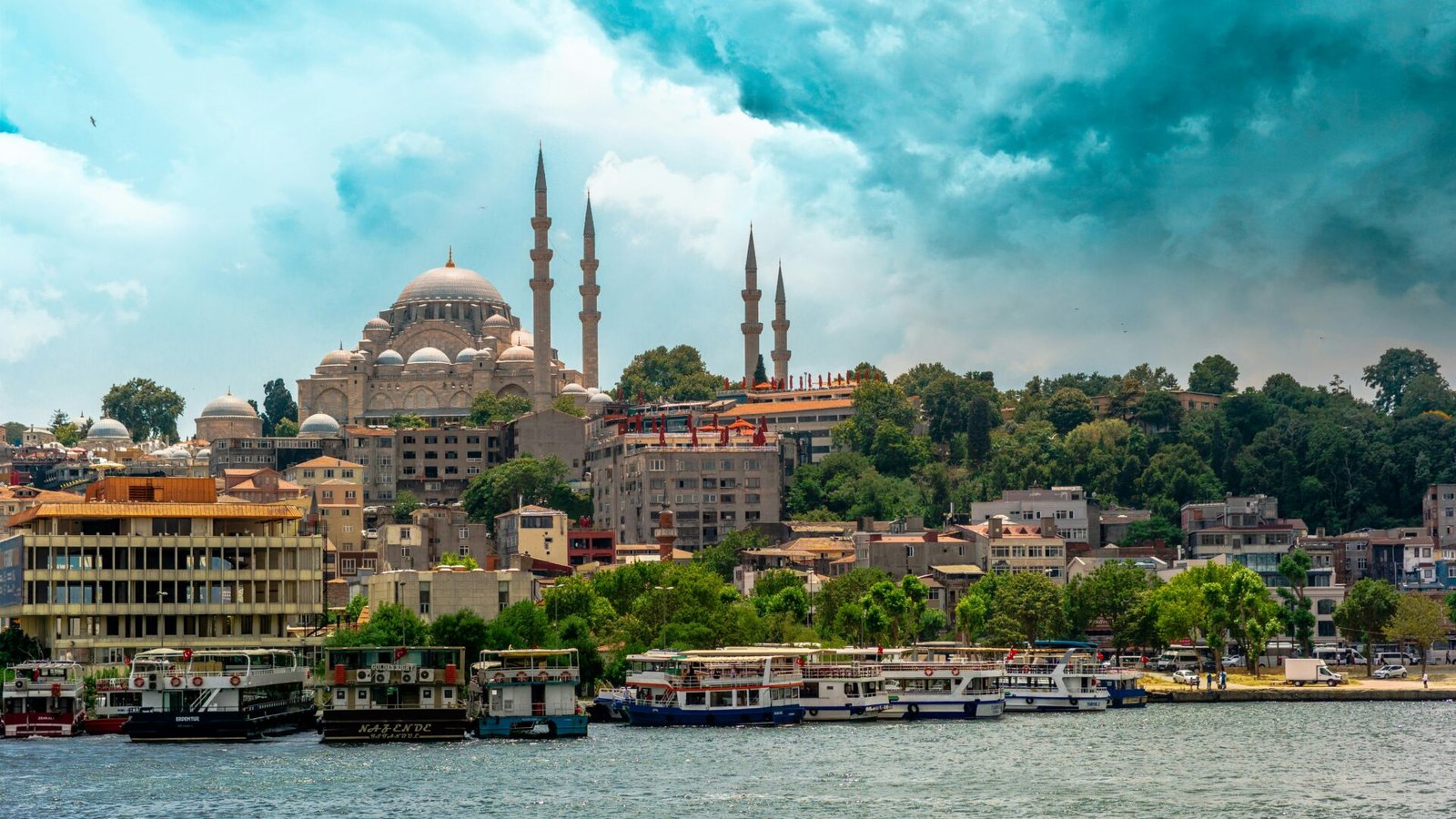
There’s a moment it happens somewhere between your first glass of çay in a street-side tea house and watching the sun sink behind the minarets when Istanbul stops being a destination and starts feeling like somewhere you’ve always half-remembered. It gets under your skin in a way that very few cities manage. Paris impresses. Tokyo astonishes. But Istanbul? Istanbul keeps you.
This isn’t another checklist of monuments to photograph and restaurants to tick off. If you’re planning to visit Istanbul 2026, you already know about the Grand Bazaar, the Topkapı Palace, and the Hagia Sophia. What this istanbul travel guide 2026 is really about is the city between those landmarks the neighbourhoods that don’t make the top of the search results, the commutes that are actually worth taking for their own sake, and the small decisions that separate a frantic tourist experience from something genuinely memorable.
Why Istanbul is the World’s “Most Desirable City” in 2026
It’s not a title any official body handed out, but spend enough time scrolling through travel forums and reading destination forecasts and one thing becomes clear: Istanbul is having a moment a long, sustained, increasingly deserved one. In 2026, the city is drawing a different kind of traveller than it did a decade ago. Fewer package tourists rushing from site to site; more people arriving with a longer list of neighbourhoods than attractions.
Part of this shift is practical. Istanbul local experiences have become far easier to access, partly because a generation of younger Istanbullus have built businesses from micro-roastery cafés in Cihangir to natural wine bars tucked into Karaköy side streets that genuinely welcome outsiders rather than merely tolerating them. But the deeper reason is that Istanbul is one of the very few cities in the world that genuinely delivers on its own mythology.
You can walk from a Roman cistern to an Ottoman library to a contemporary art gallery and never feel like you’ve crossed an architectural discontinuity because in Istanbul, you haven’t. The city layered itself, period upon period, and the result is a texture that no amount of urban regeneration has quite managed to sand smooth. That roughness, that resistance to being packaged into a tidy experience, is exactly what draws people back.
Things to do in Istanbul in 2026 look rather different from what they did even five years ago. Slow travel istanbul has become a genuine philosophy here, not just a hashtag. You’ll find people spending three days in a single neighbourhood eating there, walking there, sitting in the same square three mornings in a row rather than attempting to “do” the whole city in a long weekend. Istanbul rewards that patience. It punishes the opposite.
One important note before we go any further: the city is genuinely large. Larger than most first-time visitors expect. Getting from the European side to the Asian side, or simply from Taksim to Sultanahmet, can take forty minutes on a good day and considerably longer when the traffic locks up. How you handle arrival and movement will shape the entire texture of your trip.
The Secret to a Stress-Free Arrival: Why Your First Hour Matters
Most things that go wrong in Istanbul go wrong in the first few hours. This isn’t a particularly controversial observation it’s just that arrivals into Istanbul are uniquely high-stakes. The city has two major airports: Istanbul Airport (IST) on the European side, one of the busiest in the world, and Sabiha Gökçen Airport on the Asian side, roughly 50 kilometres from the city centre. Both serve international routes; both can be genuinely disorientating if you land without a plan.
The taxi situation at both airports is something travel forums have been warning about for years, and those warnings haven’t become outdated. Unlicensed drivers, convoluted routes, and meters that tick at a suspiciously enthusiastic rate are still the dominant experience for anyone who walks out of arrivals looking uncertain. The Havataş airport bus is a solid option if you’re flexible on timing, travel light, and don’t mind navigating connections at the other end. For most travellers, though, and certainly for anyone arriving after a long flight, it simply isn’t the right way to begin.
The istanbul airport to city center transfer question has a cleaner answer than it used to, and it comes down to a decision made before you leave home rather than after you land.
Plan the Transfer Before You Land It Really Does Change Everything
The travellers who arrive into Istanbul looking composed and unhurried are almost always the ones who sorted their ground transport in advance. This isn’t about luxury for its own sake; it’s about removing the friction of the worst possible moment. You’ve been on a plane for four hours, your bag took twenty minutes to appear, and the arrivals hall is heaving. That is not the moment to negotiate.
Booking a private chauffeur service istanbul in advance means a name on a board, a waiting vehicle, and a driver who already knows where you’re staying. It sounds simple because it is. But the difference it makes to how you feel for the rest of that first day settled, oriented, already a little bit in love with the city is surprisingly significant.
Mokan Travel: Your Gateway to VIP Comfort from Istanbul Airport
Among the transfer services operating out of both Istanbul airports in 2026, Mokan Travel has built a genuine reputation for doing this particular thing well. The company offers vip istanbul airport transfer with Mokan Travel from both IST and Sabiha Gökçen, and what distinguishes them from the broader market is a combination of things that are harder to fake than they sound: reliable punctuality, fluent English-speaking drivers with actual local knowledge, and vehicles that are clean and well-maintained without being ostentatiously corporate.
VIP istanbul airport transfer services in Istanbul vary wildly in quality, and the internet is full of glowing reviews that turn out to be for companies that no longer exist or have dramatically changed since someone wrote about them in 2022. Mokan Travel occupies a different category a company that has built its reputation on repeat business and word-of-mouth from travellers who come back to Istanbul specifically because the city got to them, and who don’t want to risk starting their next trip in the wrong way.
For travellers arriving at Sabiha Gökçen Airport specifically which handles a growing number of budget and charter flights from across Europe the transfer question is even more important. Sabiha Gökçen is considerably further from the historic centre than Istanbul Airport, and the road between them crosses the Bosphorus bridge, where traffic conditions can shift dramatically by time of day. A sabiha gokcen airport transfer with a driver who knows the road patterns and can time the journey intelligently is worth considerably more than it might look on paper.
Luxury travel istanbul 2026 doesn’t have to mean five-star hotels and helicopter views. Sometimes it means not starting your trip exhausted and slightly resentful. That’s what a well-planned transfer from the airport actually gives you.
The Mokan Travel booking process is straightforward details available at their website and the team is responsive to changes and adjustments, which matters when flight times shift. You can also enquire directly about istanbul airport transfer options for larger groups, private tours, and bespoke arrangements during your stay. It’s worth noting that what they offer isn’t just a ride: a good driver can answer the questions you haven’t thought to ask yet, from which neighbourhood suits your pace to where the best breakfast is near your hotel.
Beyond the Blue Mosque: Exploring the Soul of Kuzguncuk and Balat
Here is where things get genuinely interesting, and where the istanbul travel guide 2026 conversation diverges most sharply from what a guidebook published five years ago would have told you.
Sultanahmet is extraordinary. The Blue Mosque and the Hagia Sophia are not overrated they are genuinely among the most astonishing built environments on earth, and anyone who dismisses them as “too touristy” is performing a kind of snobbishness that serves no one. Go. Stand inside them. Take as long as you need.
But then leave Sultanahmet. Leave it for a full day, or two.
Kuzguncuk: The Neighbourhood That Forgot to Modernise
Of all the hidden gems in istanbul, Kuzguncuk is perhaps the most quietly insistent. It sits on the Asian shore of the Bosphorus, south of Üsküdar a village-sized neighbourhood of painted wooden houses, a synagogue and a Greek Orthodox church and a mosque all within a short walk of one another, and a high street that appears to be operating on a commercial logic from a different era. There are no chain restaurants here. There are no tour groups. There is, on weekend mornings, a slow procession of Istanbul families doing what Istanbul families have always done: buying bread, greeting neighbours, sitting with tea.
The kuzguncuk guide that most visitors carry points them towards the painted houses on Icadiye Street and the view from the hill above. Both are worth it. But the real instruction for Kuzguncuk is simpler: slow down. Eat breakfast at one of the small meyhanes. Walk down to the waterfront and watch the ferries cross. Talk to the cat there will be many cats and come back the following morning if you can.
Getting to Kuzguncuk from the European side takes around thirty minutes by ferry from Eminönü or Karaköy to Üsküdar, then a short minibus ride south. The commute itself is worth doing.
Balat: Colour, History, and the Coffee You Didn’t Know You Needed
Balat, on the Golden Horn side of the historic peninsula, has been “discovered” several times over the past decade and has somehow managed to remain genuinely interesting throughout. The neighbourhood is old deeply old, with a Jewish and Greek Orthodox heritage that stretches back centuries and the colourful houses that line its steep, cobbled streets have been photographed to the point of cliché without actually becoming one.
A balat walking tour done properly should take at least half a day. Start at the Fener Greek Orthodox Patriarchate early in the morning, before the light gets harsh. Work your way down through the side streets towards the waterfront. Stop for breakfast (the menemen at several of the small restaurants is exceptional). Look into the antique shops, most of which are genuinely antique rather than merely decorative. End at the Ayvansaray gate on the old Byzantine city walls and sit there for a while.
What makes Balat worth extended time rather than a quick visit is the way it rewards attention. The details here a carved door frame, a fragment of Byzantine brickwork incorporated into a later Ottoman wall, a workshop door left open to show a craftsman at work accumulate into something that feels less like tourism and more like actual presence in a living city.
Crossing Continents: The Art of Slow Commuting on the Bosphorus
Istanbul is the only city in the world that sits on two continents, and while that fact is often deployed as a marketing line, the actual experience of crossing between them is genuinely unlike anything else. Not the bridge crossing though that too has its moments but the ferry crossing.
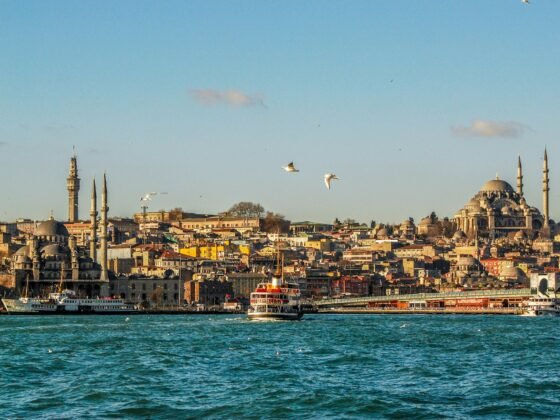
The vapur, the old Bosphorus ferry service, is Istanbul’s great democratic institution. For a few lira, you board a large, sometimes ancient vessel at Eminönü or Karaköy, take a seat on the outer deck if the weather allows, buy a glass of çay from the on-board service, and spend twenty-five minutes watching one of the world’s great waterfronts pass in both directions. The Topkapı Palace silhouetted against the morning sky on the European side. The Kız Kulesi lighthouse standing in the water between continents. The Anatolian hills rising beyond Üsküdar.
Slow travel istanbul finds its perfect expression on the Bosphorus ferry. This is not transport as means to an end. The crossing is the experience.
For those who want to take it further, the full Bosphorus tour a longer boat journey that runs up to the Second Bridge and back operates daily from Eminönü and provides a view of Istanbul that is simply unavailable from the land: the wooden yalı summer houses of the Ottoman elite preserved improbably along the shore, the fortresses of Rumeli and Anadolu facing one another across the narrowest point of the strait, and the sense that the city extends endlessly in both directions, denser and more textured than any map suggests.
2026 Culinary Hotspots: Where Tradition Meets Modern Gastronomy
Istanbul’s food scene in 2026 is in an interesting position: simultaneously more internationally acclaimed than it has ever been and, in its best moments, more committed to its own traditions than the hype-driven era of a few years ago might have suggested.
The meyhane the traditional Turkish tavern, originally associated with the city’s old minorities and still carrying that slightly transgressive atmosphere has had a revival that looks, from the inside, more like a return than a reinvention. Places like those in Beyoğlu’s side streets and the neighbourhoods around Kadıköy on the Asian side are full on weekday evenings with tables of mixed generations sharing raki and meze in a way that feels continuous with a tradition going back generations.
On the more contemporary end, Karaköy and the streets around it have become home to a cluster of restaurants and cafés that are doing things with Turkish ingredients especially the extraordinary produce of Anatolia that would have been uncommon even five years ago. The fermentation movement has arrived with particular force: pickled and preserved vegetables, aged cheeses, sourdough from heritage grains. These aren’t gimmicks; they’re the logical extension of a food culture that never really abandoned fermentation in the first place.
For breakfast and Istanbul breakfast deserves its own paragraph, possibly its own article the Turkish spread (serpme kahvaltı) of cheeses, olives, tomatoes, eggs, honey, clotted cream, and fresh bread remains one of the most civilised meals available anywhere in the world. The best versions are found not in the tourist-facing restaurants of Sultanahmet but in neighbourhood places in Beşiktaş, Arnavutköy, or on the Asian side in Moda. Allow two hours.
Best neighborhoods in istanbul for food, in practical terms: Kadıköy on the Asian side for its produce market and density of excellent local restaurants; Cihangir and Galata on the European side for the contemporary café scene; Fatih for the most traditional and conservative face of Istanbul’s Ottoman culinary heritage; and Arnavutköy on the Bosphorus shore for some of the city’s finest fish restaurants.
The following is the unglamorous but genuinely useful part of any istanbul travel guide 2026, and it’s worth paying attention to.
Timing. The most congested months are July and August, when temperatures are high and tourist numbers peak. April, May, September, and October offer far more comfortable conditions warm enough to spend time outdoors, cool enough to walk for hours without exhausting yourself, and considerably less crowded at the major sites. Ramadan is worth researching before you go: the nightly iftars in the old city create an atmosphere of communal celebration that is genuinely extraordinary but also significantly changes the rhythm of the neighbourhoods.
The Grand Bazaar. Go early before 10am or late, in the final hour before closing. The middle of the day is simply a different experience, and not a better one. The same logic applies to the Spice Bazaar. Both places are worth visiting; both are substantially more enjoyable when they aren’t at full tourist capacity.
Transport. The Istanbul metro system has expanded significantly and now connects many of the key areas visitors want to reach. An Istanbulkart (the city’s tap-and-go transport card) is worth getting immediately and covers metro, tram, ferry, and bus. The tram line from Sultanahmet to Kabataş, and the funicular up to Taksim, are useful connections. However, the most enjoyable way to move around much of the city remains on foot Istanbul is not a flat city, and some of its best moments happen on the hills between one neighbourhood and the next.
The Asian side. A significant number of visitors to Istanbul never cross the Bosphorus. This is a mistake. Best neighborhoods to stay in istanbul 2026 now genuinely include options on the Asian shore Kadıköy, Moda, and the area around Üsküdar which offer a quieter, more residential experience that many travellers find preferable to the hotel-dense streets around Sultanahmet or Taksim. Ferries cross regularly throughout the day and evening.
Cash and cards. Istanbul in 2026 is far more card-friendly than it was even a few years ago, but smaller establishments, market vendors, and most public transport options either prefer or require cash. Having some Turkish lira on hand is practical. Currency exchange rates at the airport are typically poor; use an ATM in the city or exchange at one of the many bureaux de change in Beyoğlu or Kadıköy.
Language. Turkish is the only official language and, outside of the main tourist zones, the working assumption will be that you don’t speak it. A few phrases merhaba (hello), teşekkür ederim (thank you), lütfen (please) will take you further than you might expect. Istanbul’s younger population is broadly comfortable in English, and the city’s long history as a meeting point of cultures means there’s a practical tolerance for miscommunication that makes getting around easier than it might otherwise be.
One Last Thing
The best istanbul local experiences have something in common: they require you to stop trying to maximise your time. Istanbul doesn’t yield to efficiency. It yields to attention.
Sit in the same tea garden two days in a row and you’ll be acknowledged the second time. Walk slowly through Balat in the early morning and the neighbourhood reveals itself differently than it does mid-afternoon. Take the long ferry rather than the fast one. Order another glass of çay when you’ve already had enough.
The city has been layered by thousands of years of people who weren’t passing through who were, in one sense or another, staying. The part of it that gets under your skin is the part that understands this.
Image: Ibrahim Uzin, Unsplash