
by Bhavana Kulkarni
Shortlisted: PureTravel Writing Competition 2025 Stories For Survival
The Day I Didn’t Wake Up
I died on a Tuesday.
It wasn’t glamorous. I didn’t save anyone. There was no thunder or blazing light. Just me, Srikanth Srivastava, a 29-year-old freelance writer living in Bangalore, who fell asleep after a late-night dosa binge and never woke up.
The doctors later said it was a silent heart attack. Ironic, isn’t it? All those nights ignoring chest pains, blaming the stress on deadlines, skipping health checkups like they were optional. I thought I had time. Turns out, I didn’t. In the end, I wasn’t taken by fate, I was taken by my own neglect.
I felt like I was slowly rising from my body, like a balloon drifting up into the sky. I looked down and saw my small rented apartment in Koramangala. The TV was still running Netflix, and my phone kept buzzing with messages from my girlfriend, Anjali Iyer. That’s when it hit me. I was dead. Just like that. One second here, next second… nowhere.
But I wasn’t completely gone.
I was still here, but different.
At first, I panicked. Imagine yelling and waving your hands while no one looks at you. Mr. Sheshadri, my landlord, came into my apartment because the TV had been running nonstop for two days, and my phone kept buzzing loudly. He knocked first, then opened the door with his spare key. When he saw me lying there, cold and still, he dropped the glass of water he was carrying. It shattered on the floor, just like the reality of my death.
My funeral was small. My parents came down from Tamil Nadu. My mother, Sushma Srivastava, clutched my photograph like it might suddenly speak. My younger sister Kavya kept staring at the ground, clutching my old cricket bat. My father, Harishchandra Srivastava, didn’t say a word, not when he walked around the pyre with trembling hands, not when he lit the fire, not even when my ashes were immersed in the Kaveri.
At the cremation ground on Mysore Road, they placed my body on the wooden pyre and lit the fire as per the Hindu rituals. The smoke rose up like a prayer, tangled in the chants of the priest who muttered verses from the Garuda Purana. The family offered pind daan and sat through the thirteen-day mourning ritual. I watched all of it, unable to leave, unable to be held.
On the thirteenth day, I watched my father walk alone to the terrace after the priests left. He looked up at the sky and whispered, “You were supposed to outlive me, kanna.” Then he folded his hands toward the setting sun, and for the first time in my life, even in death, I saw him cry.
Anjali didn’t cry. She just stood there. Still. I used to think she hated me. Maybe because we had started drifting apart in the last few weeks. I had been too caught up in my writing deadlines and ignored her messages sometimes. But in that moment, seeing her at my funeral, I understood, I had been completely wrong.
The afterlife didn’t come with instructions. There were no gates, no godly voice, no ticket booth. Just me. Watching. Somehow, I was stuck in Bangalore, like a spectral tenant nobody noticed. My apartment was cleared. My books given away, my veena gifted to a temple in Malleshwaram. But I stayed. And I watched.
Days turned into weeks. I drifted across roads, buildings, lives. I saw the chaiwala, Ramesh Anna, on the corner still overboil the tea, mumbling to himself in Kannada. My best friend Arjun Mehra returned from his trip to Hampi and found out I was gone. He broke down in the middle of Church Street. People passed by, some stared, but no one helped. That was the first time I cried. Ghost tears don’t fall. They just ache like old memories.
I didn’t know I needed healing. I thought I was just meant to watch. To drift around like a forgotten wind. But every time I read Kavya’s letters, something inside me shifted. She reminded me of who I had been, not just the guy who died, but the brother, the friend, the imperfect man who tried. Through her words, her stubborn love, and her way of keeping me alive in memory, I began to feel again. And for the first time, I realized that healing wasn’t only for the living.
She started writing letters to me. She left them on my windowsill near the tulsi plant Ma used to water. Things like: “You idiot, you still owe me 500 bucks. And a hug.” And: “I told Ma you were trying to change. She believes me.” Her letters became my anchor.
She wrote every Sunday, after lighting an oil lamp in my name. I read every single one of her letters, even the ones where the ink had smudged because she had to write them quickly during her exams or when she was upset after a breakup. She talked about life, her dreams, her fears. She talked about me like I was still part of her world. In those moments, I truly felt seen.
One day, I followed her to her college. She slapped a guy named Rohit who tried to touch her inappropriately during a campus fest. Her friends rallied behind her. Then she looked into the mirror in the restroom, fixed her bindi, and smiled. A bittersweet, broken-and-mending kind of smile. I felt proud. And it was then I noticed something else. I wasn’t alone.
It started with a whisper. Then a shape. Then a voice. “You’re new here, huh?” He called himself Rishi, a quiet soul from another time, but said I could call him Rishi Bhaiyya. Dead for 17 years. Crushed in a stampede at a religious festival in Shivajinagar. But unlike me, he wasn’t just watching. He was guiding.
He told me I had a choice. Watch until I healed, or until they healed. “Everyone thinks death is the end. But sometimes, it’s just a chance to see who you really mattered to,” he said, sitting cross-legged in mid-air near MG Road.
Rishi Bhaiyya became my friend. A strange sort of big brother who quoted the Gita and Bollywood in the same breath. He taught me how to listen to silence, how to see beyond action into intent. He taught me patience.
That’s when I started watching Anjali more closely. She was deeply angry, furious at me for leaving without warning, and at life for being so unfair. She couldn’t understand why someone she loved could be taken away just like that. In her pain, she quit her job at the Kannada news channel where we first met. The spark in her eyes was gone. She started drinking to numb the ache. She fought constantly with her mother, Meenakshi, whose warm and inviting home in Jayanagar slowly turned into a house of silence and arguments. It wasn’t just grief, it was loneliness wrapped in confusion.
Then one night, Anjali walked to Ulsoor Lake. The moonlight shimmered on the water’s surface as she stood at the edge, wearing the same maroon kurti she had worn on our very first date. Her shoulders trembled. She sobbed like a child lost in a crowd. I screamed. I tried to hold her back, to make her hear me. But I was only air, only memory. My voice was lost in the wind, like a song half-forgotten.
Just then, her phone rang. It was Kavya. Her voice was gentle but firm. “Let’s talk,” she said.
That phone call became a turning point.
“Come home,” Kavya had said gently that night. “You don’t have to say anything. Just come. Let’s sit. Let’s be angry together, if that’s what it takes.”
Anjali had walked to Kavya’s house, still wearing the maroon kurti. They didn’t speak much at first. Kavya simply poured her some warm milk, wrapped a shawl around her shoulders, and sat beside her. That night, they both cried. Not in grief alone, but in shared memories and what-ifs.
They started meeting every week after that. It wasn’t planned at first. Anjali would text, “Can we talk?” and Kavya would always say yes. They found their rhythm, Blossom Book House on Sundays, flipping through poetry and grief memoirs. At Cubbon Park, they would sit under the banyan tree near the central library. They spoke about me openly, about my jokes, my terrible cooking, my obsession with Rajasthani history, and my dream of writing a novel.
They healed together. They talked about the unfairness of it all, the pain, the anger. But they also talked about how I loved them, how I did my best, even if I made mistakes. Slowly, their meetings became less about grieving and more about remembering. They sketched out an idea, how about a place where others could write letters to the people they’ve lost?
A blog. A space to talk, to grieve, to share.
They called it Project Srikanth.
And it grew.
Until the night everything almost fell apart.
One late evening in Cubbon Park, I noticed a familiar face lurking in the shadows. Nikhil Menon. An old acquaintance. Once a friend, later a competitor. Ambitious, bitter, always in search of recognition. He stood silently, watching Anjali and Kavya with unsettling intensity. Then I heard him mutter under his breath:
“Too bad, Srikanth. You don’t get to win.”
I followed him. What I uncovered chilled me. Nikhil had begun a calculated smear campaign against Project Srikanth. He created fake identities, wrote fabricated letters pretending to be grieving users. He spread lies online, slowly poisoning the trust the blog had earned. And he didn’t stop there, he reached out to media houses, pitching exposés with tampered screenshots, twisting empathy into manipulation.
He almost succeeded.
But then, Kavya received an anonymous email.
It wasn’t just a tip, it was a lifeline. A digital folder packed with damning evidence. Screen recordings showing Nikhil editing timestamps. Voice memos from a private call he made bragging to a friend. Even drafts of articles that were never published but reeked of malice. Someone had hacked Nikhil before he could do real damage, an unseen ally from the digital shadows.
They had everything.
Kavya and Anjali confronted the storm calmly. They released a post—not defensive, but open. Transparent. It resonated more than any counter-attack could have.
Project Srikanth survived.
Later that night, I asked Rishi, “Was that you?”
He only smiled. “Not me. But someone out there clearly thought your story wasn’t done yet. Maybe it was god. Maybe it was someone who still believes in truth more than fame. Either way, you’ve still got more light to leave behind.”
That’s when I realized, maybe it wasn’t about justice. Maybe it was about god.
Project Srikanth continued. Letters poured in. Grief turned into connection. Pain became poetry.
Anjali spoke at colleges. “He made me feel seen,” she told a crowd of students. “And now, through this project, I see all of you.”
And one day, I stepped into the light.
But the story didn’t end there.
Because sometimes, love leaves behind more than memories.
It leaves echoes.
Sometimes Kavya thinks of me when she waters the tulsi. Anjali feels a breeze on days she doubts herself, like a quiet reassurance brushing past her shoulder.
And every year, on the anniversary of my death, a letter arrives at Kavya’s doorstep. No stamp. No return address. Just a note written in my old handwriting:
“Keep going. I see you. I’m proud of you. S”
At first, she thought it was her mind playing tricks. But the ink is fresh. The scent, unmistakably sandalwood, the kind I used to wear.
Years later, a local hacker from our old college admitted anonymously on Project Srikanth’s forum:
“I owed Srikanth more than I could say. He once saved my life with nothing but a kind word and a chai. This was the least I could do.”
He had exposed Nikhil. And he sends those letters each year—one last miracle born from gratitude, not from ghosts.
Maybe healing doesn’t mean forgetting.Maybe love doesn’t need a body to stay real.
As for me?
I’m at peace now.
I stood at the river’s edge, beside Rishi Bhaiyya, who turned to me and said, “Ready?”
And I was.
A soft wind lifted my spirit—weightless, untethered.Not trapped. Not watching. Just becoming… something else.
…THE END …. Or what finally lets you begin again.
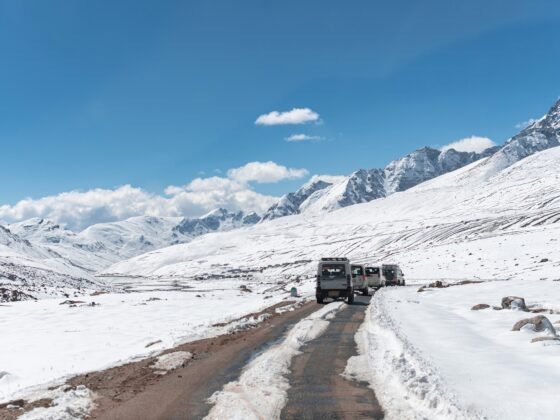
Photo by Rajat Kashyap on Unsplash