by Renata Bernado
Shortlisted in the 2026 PureTravel Writing Competition Stories for Survival
Antarctica is not a place for humans. It is a kingdom of piercing silence, where the wind screams at 80 km/h and the cold burns like fire. It was to this white desert that I embarked in 2018, as part of a Brazilian scientific mission of military personnel and scientists. My role? To support research on climate change. My personal goal? To prove that I was stronger than any storm. Little did I know that, in the end, it would be the ice that would teach me not to be fragile.
The Arrival: When the continent of my certainties.
In the first few days, Antarctica treated me like an intruder. The Comandante Ferraz base, rebuilt after the 2012 fire, was an oasis of technology surrounded by an icy hell. Even with thermal clothing, the cold penetrated like a needle. We slept in cramped bunks, and the wind beat against the windows like a monster trying to get in. My biggest challenge, however, was not physical: it was psychological. The polar night made time melt away. Without sunlight, the days turned into an endless fog, and my mind began to falter. Work kept me busy so I wouldn’t think.
Then I met the emperor penguins. On an outing to collect ice cores, a group of them surrounded our team. One curious chick approached me, tilting its head as if to ask, “What are you doing here?” At that moment, I knew we were not heroes, but visitors. Antarctica didn’t need us, we needed it.
The Accident: When the Ocean Swallowed Me
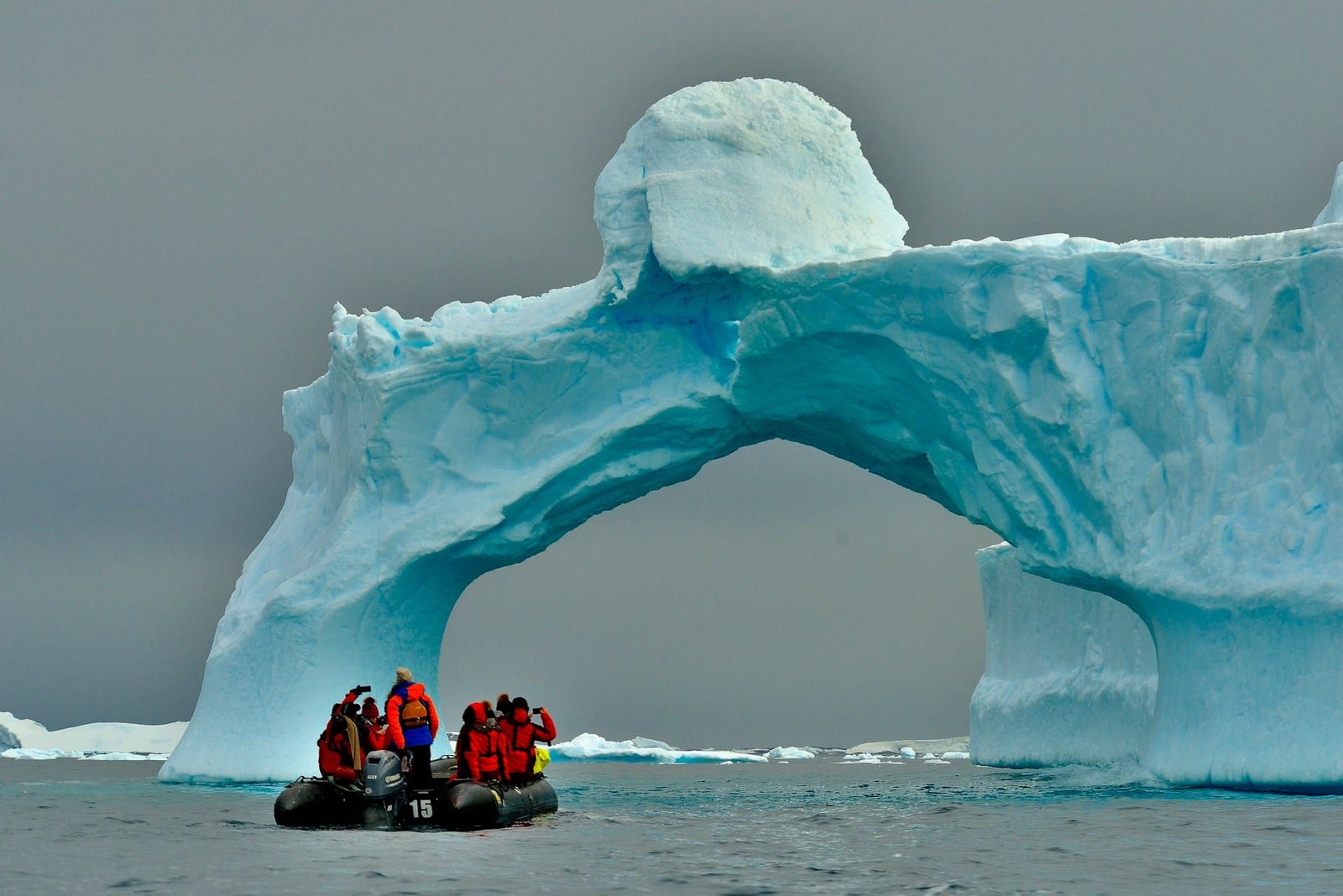
The turning point came on a seemingly ordinary day. We were sailing over the icy peak in a dangerous area of the sea near Admiralty Bay. We were moving forward carefully, dodging large swells, when a wave hit the boat and I fell. Desperation. I fell into the water. The shock was instantaneous. The salt water at -25°C entered my waterproof suit like a knife. I struggled to climb out, but the weight of my boots and equipment dragged me down. I remember thinking: “Is this where I’m going to die? In a place where not even my body will be found?” Then I felt a violent tug on the rope that was around me. My colleagues, trained for emergencies, dragged me to the surface.
Back at base, shivering under three blankets, I had an epiphany: Antarctica was not the enemy. It simply existed, indifferent to our arrogance. I had spent weeks battling the cold, but I was the one who needed to adapt.
The Transformation: When the white desert made me green
After the accident, everything changed. I realized that my mission was not to “overcome” the ice, but to listen to it. I began to accompany biologists on studies of krill, the small crustacean that sustains all Antarctic life. I learned that every breath I took depended on the phytoplankton that flourished there and that the CO2 emitted in Brazil and around the world was suffocating these microorganisms. Even the way I walked changed. I began to tread like penguins: slowly, respecting the terrain. Instead of complaining about the isolation, I began to write letters to my family, telling them about the humpback whales that danced in the bay and about the snow leopard that spied us one night, its eyes shining like beacons in the darkness.
The Legacy: When I Took Antarctica Home
Today, five years later, Antarctica still lives inside me. I stopped working at the institution I took home and founded an environmental education project in public schools. In my lectures, I show photos of those penguins and tell how a continent without owners taught me to be a guardian. The greatest irony? I never used the word “cold” again. When someone complains about winter wherever I am, I smile and remember: there is a place where the ice is as old as the stars, and where one day it embraced me, not to kill me, but to wake me up.
“Like ice, stay strong every day.”
Photo by Long Ma on Unsplash