by Anne Meale
PureTravel Writing Competition 2025
It could scarcely be described as an intrepid expedition.
A plethora of road signs, multiple advertisements and entries in guide books, hotel leaflets and tourism websites; what had initially on our inaugural visit seemed like an Amazonian trek, an unknown, untested pilgrimage, proved to be a ten-minute stroll around the rear of our hotel. Past overflowing refuse bins on uneven pavements, tiles cleaved by tree roots, up and down misaligned kerbs, a swift right beyond the tourist pubs – all boarded up, whether permanently or just until evening hours was ambiguous – across the bustling road (look left first) and through gates that were padlocked until 7p.m.
Now on arrival, on each subsequent holiday, when the transfer bus tootles past – always at crawling speed through the town, despite grand prix status on the motorways (the driver must surely be brimming over with frustration when he’s on shuttle duty, all these package-holiday tourists cramping his racing style) – I get a fizzing in the pit of my stomach seeing the Masia Catalana en route to that season’s chosen hotel. Even in its deserted diurnal state, I am itching to be within the compound, craving the endorphins I am awarded when I am there of an evening, nursing a cocktail under summer skies transforming from cornflower to sun-kissed coral to lapis blue.
To think at the outset, we ignored the signs on every second lamppost between our lodgings and my Catalonian mecca, before we went…and returned…and retraced…and relived.
If I could designate anywhere, one single venue, that snatches my soul from my overthinking brain and truly relaxes dwindling, weary synapses, it is here. And for me, the abiding catastrophiser, that is some feat.
Many would understand the lure of a Caribbean island, or an Italian lake, the wistfulness of a Scottish castle or an African savannah strewn with the calls of the wild. In my mind, it is a sympathetically and faithfully remodelled development situated at the culmination of one of the main streets in the tourist area of Salou, in Tarragona Province, Catalonia.
I was the one most surprised by the depth of my feelings for this humble, gravelly site. I’ve frequented settings with more picturesque backdrops, dreamed about remote vistas beyond imagination. Yet here, in the midst of a 1970s reconstruction, I could find peace.
Yes, you read that correctly – a reconstruction. Not even a minor wonder of the world. An assembly constructed three years after my birth has become my foreign haven. How adventurous; Christopher Columbus (or Cristòfol Colom as he is known in these parts) would wither underneath his doublet.
Ambling by the restricted site during daylight hours, what I perceived was an ancient farmhouse: a series of buildings, which, as I peered through the fencing, comprised of ye olde living accommodation, stables, animal enclosures, and sporadically displayed iron tools. Masses of stone, corrugated roofs and wooden doors, the glaring absence of farmhands and their animals.
A serendipitous meander in the luminescence of evening manifested a Cinderella transformation.
Immediately through the entrance in the courtyard was an alfresco bar, simple but delightful in presentation, seating arranged circular fashion, tables set with local pottery and vases of indigenous flowers. Strings of lights peeping from woven basket hats illuminated the ring of tables, as did those snaked around the trunks of pines soaring within the enclosure. The trees formed a natural canopy, the ombre sky filtering through their branches, changing colour with every passing minute. The people serving, despite their constant industry, made each patron an old friend, instantly at home and welcome. As they proclaimed us on our most recent visit: ‘family’.
Around the bar’s perimeter resided a dozen artisanal booths, bequeathing crafted goods of every description, from jewellery to carved wood, from semi-precious stones to handmade garments flapping in the balmy evening breeze. Locals and tourists alike flocked to the stalls, the sellers enjoying animated conversations with their customers, each individual kiosk decorated lovingly as works of art in themselves.
Between vendors and bar staff, I discovered more about the Masia Catalana itself: built in 1974 as an example of farm life through the centuries, the primary building and tradition of adding further structures over the decades, their purposes ever changing and morphing for the needs of the season. The original house extension. The contemporary site is used for Christmas cribs, religious festival displays, for Halloween passages of terror and music recitals, in addition to its use of instilling historical knowledge, of the ways in which the Catalans had lived and earned a living.
Exploring the pens, the cobwebby rooms, the examples of heritage furniture scattered throughout, one could feel the passage of time whistling through the pseudo-archaic arches, sense it in the touch of skin against stone. It was a sanitised version of domestic rural history, but one of simplistic beauty.
And then, the unexpected, delighted giggles of children playing on the other side of history; the wooden playground constructed at the far side of the masia (Catalan farmhouse), bringing yesteryear, in the accessible way they have mastered in Tarragona Province, slap bang up to date. Here they specialise in interaction with the past, the ancient and the modern propping each other up, not hidden away – a free experience for all who care to learn. Showcasing living history.
Basking in the glow of rustic ambience at the table, I reflect that this is my very real wonder of the world. It is a place I forsake the stress of work, the mundane tasks of everyday life and my overworking anxieties.
As the ladies deliver drinks from their electrified cavern and pause to sit, chat and ruffle my daughter’s unruly hair, I have become part of the diorama. I am present. To me, that is the greatest journey one can make.
Serenity amongst the repurposed stone and fairy lights.
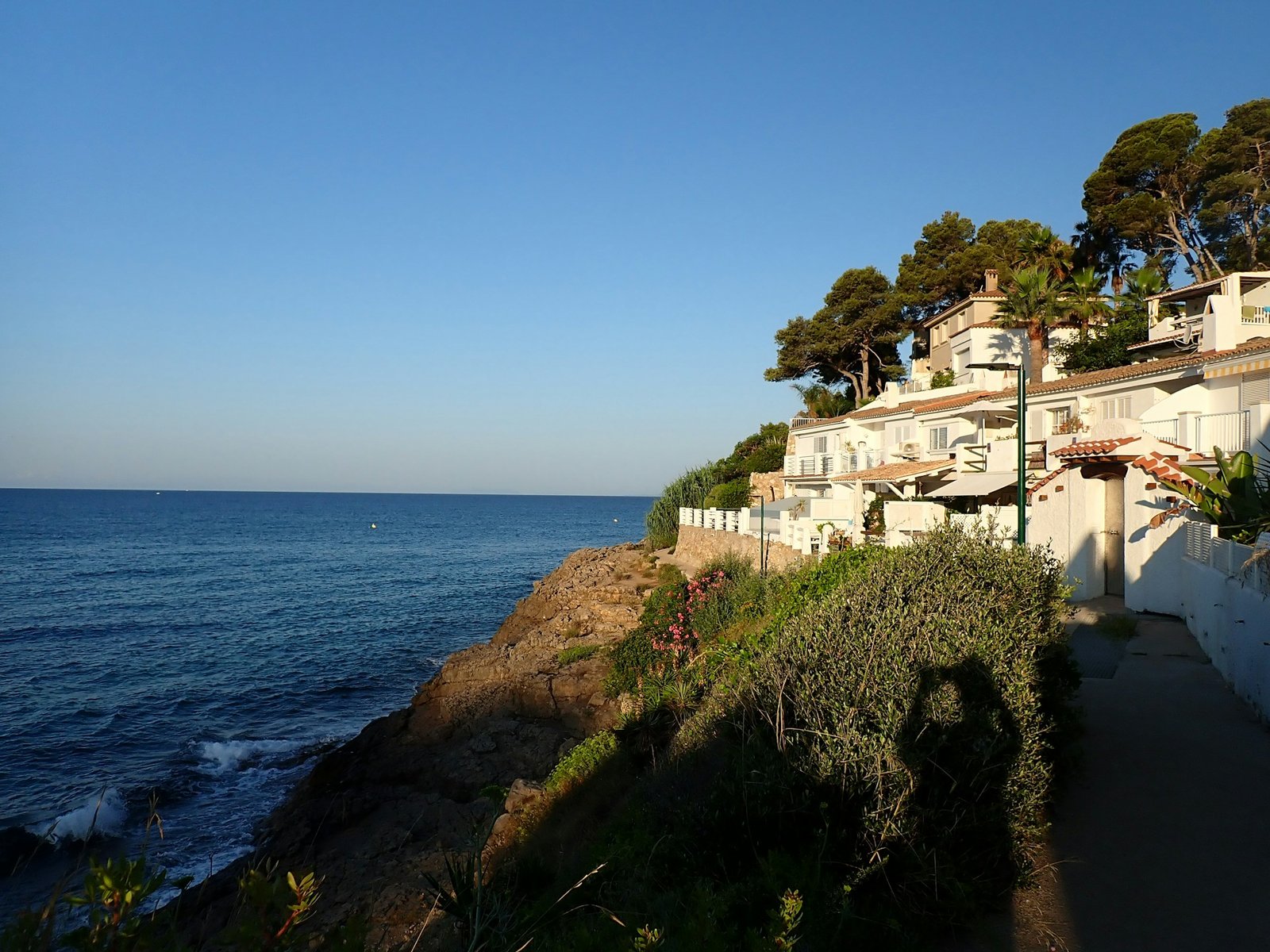
Photo by Zuska Stozicka on Unsplash