by Saroj Kumar Senapati
Shortlisted: PureTravel Writing Competition 2025
The moment I stepped onto the winding alleyway of Pontocho, Kyoto whispered to me. Not in words, but in the hushed rustling of noren curtains outside hidden izakayas, in the clatter of wooden sandals on rain-slicked cobblestones. This city speaks in layers—folded histories, quiet reverence, an unspoken contract between past and present.
I had arrived on a whim, booking a last-minute ticket after finding a crumbling photograph in my grandmother’s desk drawer: an old sepia-toned print of a street corner with a cherry blossom tree bent over, stretching toward the rooftops like it longed to escape. On the back, scribbled in fading ink, was a name—Yoshida Ryokan.
The ryokan, a traditional Japanese inn, was still there, tucked between towering machiya houses. Its sliding doors groaned as I stepped inside, the scent of tatami mats filling my lungs. An elderly woman, her hair coiled into an elegant bun, greeted me without surprise, as if she had been expecting me all along.
“You carry the same curiosity,” she murmured, handing me a lacquered key. I wondered who she thought I was.
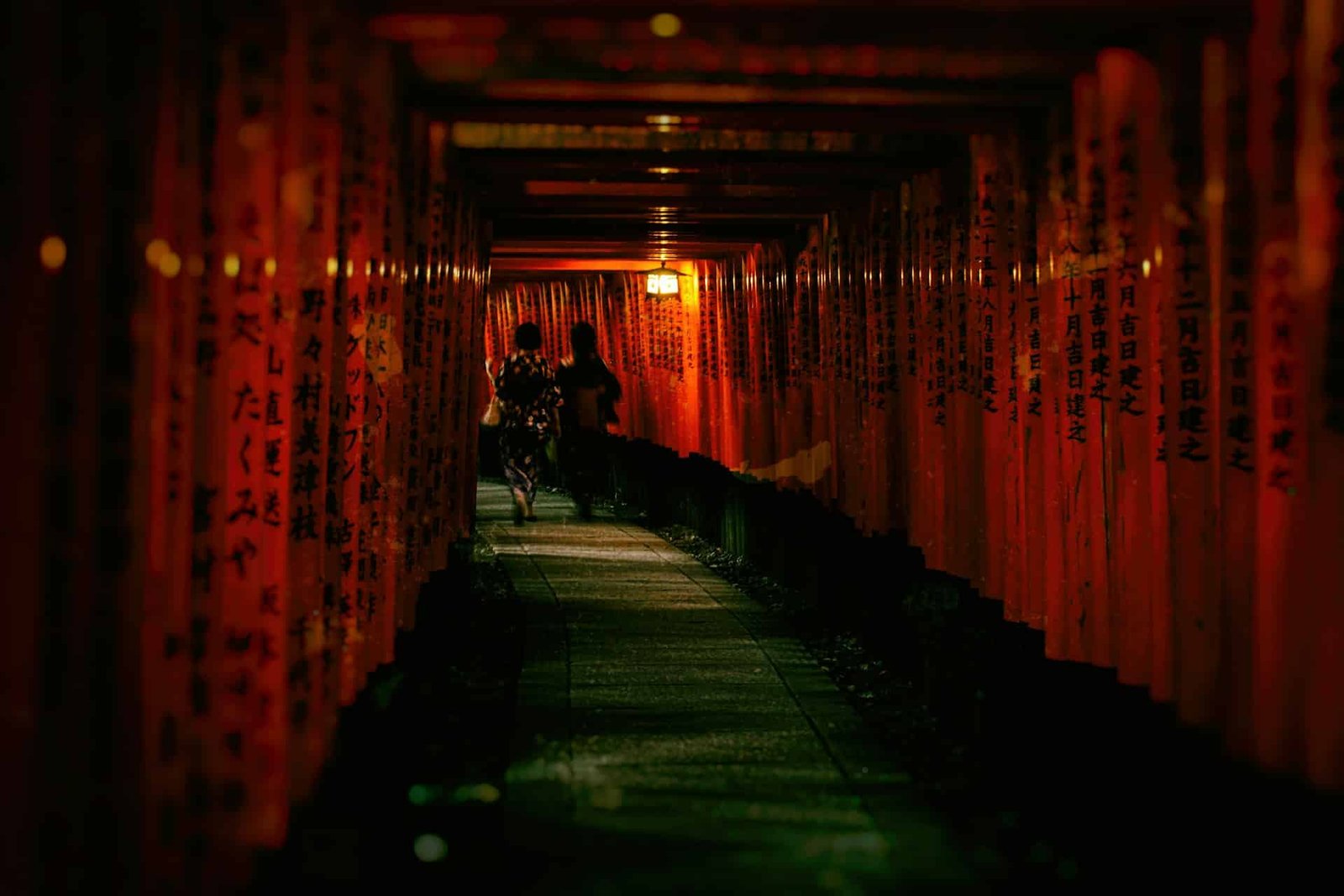
That first night, I let Kyoto seep into my bones. I wandered into Fushimi Inari’s torii gates, their vermillion hue ablaze under the lantern glow. I followed the incense-thick corridors of Kiyomizu-dera, listening to the prayers of strangers whose lives I would never know. At Nishiki Market, the scent of sizzling yakitori and fresh yuzu intertwined in the air, an intoxicating mix of tradition and indulgence. Every turn revealed another whispered secret—the past delicately preserved yet pulsing with quiet vitality.
But Kyoto’s true magic existed in the spaces between—an old man meticulously polishing samurai swords in the back of a storefront, a painter grinding mineral pigments for tomorrow’s masterpiece, a child chasing koi fish in a temple pond. There was an unspoken harmony between people and place, an understanding that time moved differently here.
It was in these in-between moments that I first felt the weight of Kyoto’s secret language—a conversation not held in words but in gestures, glances, the way rain draped itself over temple roofs like an old friend. Even the stone pathways beneath my feet carried echoes of another time, another story.
On my last day, I found Yoshida Ryokan’s hidden secret. Underneath the wooden floorboards of my room, I discovered a collection of letters—delicate, ancient paper inscribed in kanji. I couldn’t decipher them, but I recognized the name of my grandmother, her signature looping across the final page.
I brought the letters to the elderly innkeeper. She smiled, a knowing softness in her eyes, and unfolded one carefully.
“She loved this city,” she said. “And she left a part of herself here. Just as you are doing now.”
Kyoto was never merely a destination; it was a melody, an unfinished story I had inherited. And as I stepped onto the train leaving its quiet embrace, I realized—I had been speaking its language all along.
Photo by Ling Xian Su on Unsplash