by Keyuan Cao
2nd Place. PureTravel Writing Competition 2025 – Stories For Survival
Judges comments: We know right from the opening paragraph that this is going to be a cracking read. That description of Bali as “a leaf adrift on blue, its jungles and rooftops twisting like a sentence unfinished” sets a lively, virtuoso tone – and the following passages don’t disappoint. That compelling, descriptive style changes about halfway through, when the writer encounters a girl and their thoughts turn to what this all means. While I continued to enjoy the writing, I wondered if there might be a way to cover this ground within the same descriptive, poetic tone set in the first half. I think that might have lifted it into first place.
1
The plane circled once more before landing. I saw the island whole—Bali, a green leaf adrift on blue, its jungles and rooftops twisting like a sentence unfinished. I didn’t take a photo; some moments are too complete to be captured in pixels.
Stepping off the plane, the humid air wrapped around me immediately. From Denpasar to Canggu, we passed temples draped in cloth, men in sarongs, and an endless blur of motorbikes. Our taxi driver played a local pop song I didn’t understand, but the melody felt honest—no polish, just grandma’s humming.
“That’s a Penjor,” my driver pointed casually as we passed an arch bamboo pole adorned with coconut leaves and ornaments.
“For the gods,” he added, tapping the wheel as if explaining the weather.
My first night was spent in a hostel where concrete walls and rattan furniture stitched together bohemian fantasy. Tequila glasses glittered by the pool; incense burned near the check-in desk. The receptionist handed me earplugs.
“There might be a party,” she said, smiling.
Night fell quickly. I grabbed some food and rode my scooter back through the paddies. A dog crossed slowly in front of an SUV. It moved without fear, without hurry. I stopped to let it pass, struck by its calm indifference. Maybe freedom wasn’t the ability to go anywhere, but the absence of pressure to be anywhere at all.
That night, I dreamt I was floating on the sea. I wasn’t moving forward, or sinking. Just carried.
2
Dawn began not with light, but with low chant. I opened the window. The horizon held a bruised-blue glow. Mist softened the sky as though the ocean had shattered into fog.
In the lobby, the day had already begun. Slippers scraped tile floors. Coffee hissed in a French press. On glowing screens, charts loaded in New York, emails sent from London refreshed in real time. Their bodies rested on equatorial soil, but tethered to servers continents away.
Everyone was “in motion,” yet perfectly orderly.
I, too, fell into rhythm. By day, I attended virtual classes and finished my internship tasks. By night, I sat in coworking spaces listening to others ‘ seed rounds and surf reports, of the next “affordable” country worth living in. Mornings began with yoga or beach runs, afternoons unfolded into cold brews and acai bowls.
For a while, it felt like I had arrived: not through achievement, but existence. Life was close enough to touch.
3
The island dazzled. Everything was beautiful. The air itself was green, thick with chlorophyll and sun. Cafés served avocado toast with lemongrass soup, labeled with ethics—“fair trade,” “organic,” “local.” Travelers passed by in yoga pants and linen shirts, some carrying surfboards, others filming “day in the life of a digital nomad” reels.
All of this was too beautiful like a curated dream.
But the dream had seams.
I began to recognize the same faces in every coworking space. The same brands of minimalism, the same recycled talks about startups. We were all constantly relocating, yet nothing truly changed.
One night, I took a wrong turn down a narrow road. My scooter’s headlight swept across a garbage dump—plastic bags, coconut husks, broken glass, and old sandals. A girl sat nearby, scraping out the inside of a coconut shell. She noticed me but did not look up.
She just existed.
And I kept riding. But something lodged itself in me that night. A grain of discomfort beneath the skin.
4
I started asking quiet questions.
The hostel I stayed in was once a rice field.The woman selling coconut shell wind chimes near the beach everyday that his parents and grandparents had farmed that same soil. Years ago, the land was sold, exchanged for the promise of a better life in the city. That life never arrived. Now she was back, not to grow, but to serve.
The realization grew slowly:
Freedom here was not for everyone. It was purchased.
If freedom is a state, then it is also a structure. And all structures have a cost. What we live inside is a machine of illusions: one system escaped, another built in here, labeled better lighting and ethical labels.
Could “digital nomadism” be a new form of “digital colonization”? We call it “geographic arbitrage,” outsourcing our comforts to cheaper others but refusing to bear the burden of reciprocity. Consumption rises, but most of the profit ends up in the hands of those who already have enough. Locals serve, but rarely benefit.
We speak of globalization, but not of local land. We praise decentralization, yet gather in the same few trendy streets. We value lightness, as long as someone else does the lifting.
5
I could no longer call this island “beautiful” without hesitation.
The waters still shimmered impossibly blue. The coconut forest still glowed under the golden sun. The temples still rang their soft bells, and the servers still smiled. But I knew now beauty was not completely innocent. It could conceal as much as it revealed.
So I walked slower. I took backroads. I learned the rhythm of the temple bells, the name of the fruit stall owner. I silenced notifications. I listened.
I am a mathematics and economics major student; I am used to maximizing utility curves and minimizing error. But no course taught me how to model the “human cost”—the dignity of labor erased, the memory of land displaced, the fatigue of a community made background to someone else’s story.
It is easy to model a system. But who dares to price its soul?
6
One afternoon, I found a quiet beach. No surf schools. No influencers. Just wind, seawater, sand. I took off my shoes and sat on a rock. The waves were small, but constant. They didn’t ask to be heard. And still reached me.
In that moment, I understood:
Freedom is not something one person earns by escaping.
It is only real when it does not depend on someone else’s invisibility.
To be free is not to stand on another’s shoulders. To see that you are not outside the system, but inside it, and responsible.
That night, I walked home. A Penjor swayed at the edge of the village; its bamboo spine bowing in the breeze. I stood beneath it, watching the riband dance.
Maybe freedom is not about standing tall.
Maybe it’s about bowing
to the land,
to the lives we overlooked,
to the structures we once thought we had escaped.
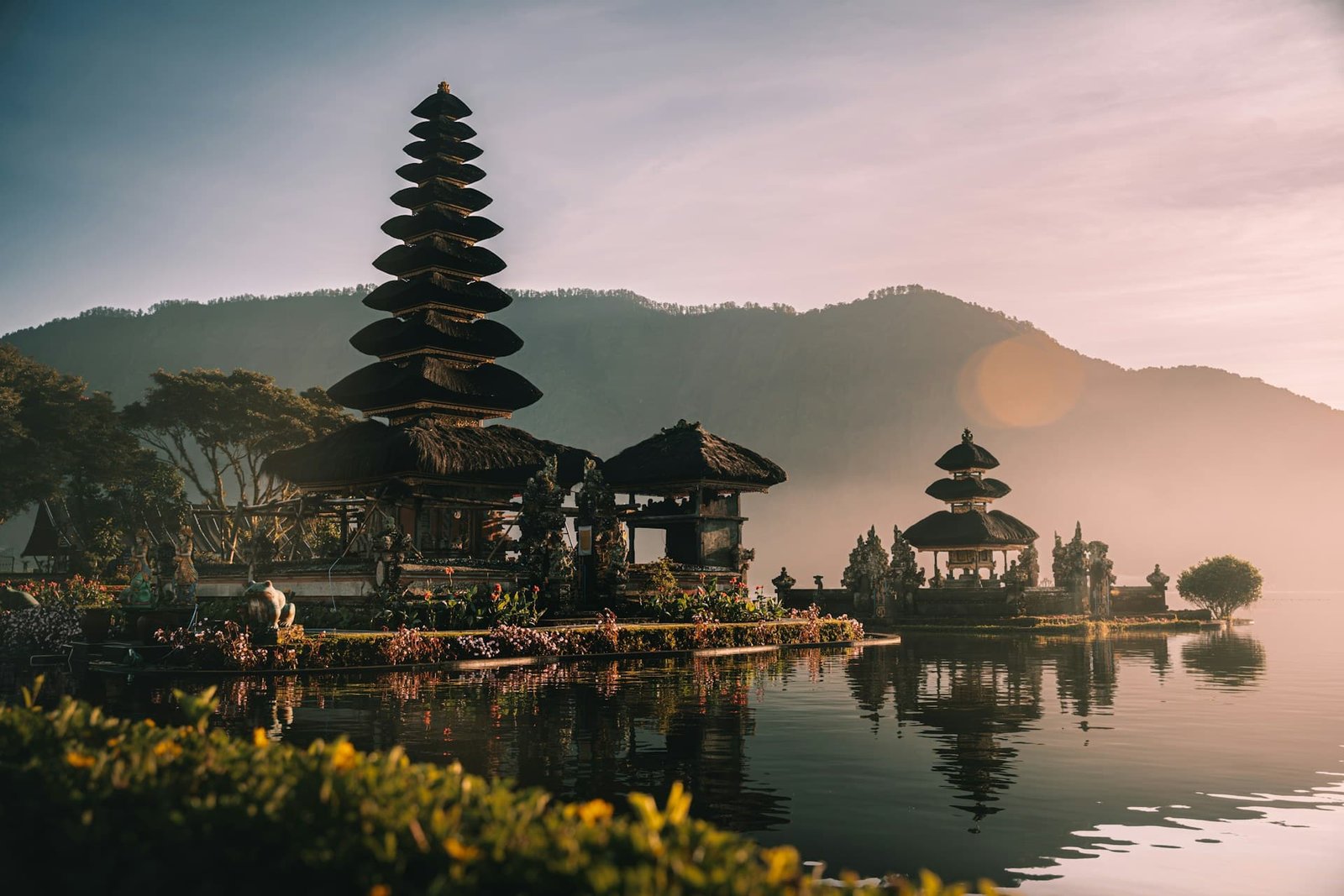
Photo by Katarzyna Zygnerska on Unsplash